


Ciji Green’s daughter, Maisie, was diagnosed with spinal muscular atrophy, causing her muscles to waste away. The disease is often fatal before age 2 without treatment. In 2019, a genetic therapy was approved by the Food and Drug Administration to treat SMA, but the single-dose therapy costs $2 million. Green’s insurance said it wouldn’t pay for the new, expensive drug.
“I became very angry, to know that there was something that could help her. And I knew without a shadow of a doubt I was burying my daughter before she was 2,” Green said.
The Zolgensma medication Maisie needed is part of a new breakthrough class of gene therapies often treating rare diseases where patients have few, if any options. But, as the high-cost drugs treat more common diseases, they could have wider impacts on the U.S. health care system.
“I liken it to a coming tsunami, which is basically gonna overwhelm the employer-sponsored insurance system,” said economist Jonathan Gruber, who helped develop the Affordable Care Act.
Today, more than 300 high-cost genetic therapies are in clinical trials, and some are aimed to treat diseases suffered by millions. Companies who provide insurance for employees could be called on to cover the new, costly medications, and many employers are not prepared.
“The first problem is that many companies in America are what we call self-insured. They pay their own medical bills. About two-thirds of the insured in America are in such arrangements,” Gruber said. “They can’t afford to pay this, so they’re facing a difficult financial decision, which is, ‘Do I cover this drug and potentially go bankrupt? Or do I not help my unlucky employee?'”
Why the drugs are so expensive
Doug Ingram is CEO of Sarepta Therapeutics, which is among those charging millions for a drug. Sarepta’s Elevidys costs $3.2 million for a single-dose treatment, but it may be all that’s needed to slow Duchenne muscular dystrophy, a muscle wasting disease.
60 Minutes 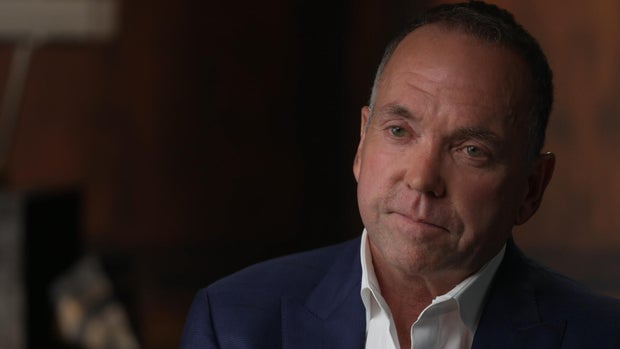
There’s an urgent unmet need for treatments for children who have the disease. It is so dire doctors have told the parents of children with Duchenne to go home and love their child, because the degenerative disease is ultimately fatal, Ingram said. His company uses an engineered gene that instructs the cells to make a protein to protect the child’s muscles.
“So the first question is could you even do this and do this safely? The second question that was obvious is if you could, you have to manufacture this stuff. And at the moment in time we did the calculation you needed more gene therapy manufacturing capacity than all of the capacity that exists on the planet earth, at the time,” Ingram said. “Every company, every research facility, every university. And we’d never made a vial of anything that looked like a gene therapy at that moment. And the next thing, you’d have to raise billions of dollars. You have to go to investors and paint a picture of the future and literally raise billions of dollars to do this. We didn’t have billions of dollars.”
Companies struggle to pay
Mike Poore, CEO of Mosaic Life Care, a nonprofit hospital system in Missouri, learned the challenges of paying for high-cost gene therapies firsthand.
Mosaic, which employs around 5,000, decided its employee health plan would not cover genetic therapies. Poore said that covering those drugs would have raised all employee premiums by $125 a month. But months later, an employee had twins diagnosed with SMA.
At the time, gene therapy for the twins would have cost $4.2 million. The family, which was denied coverage, went public and blamed Mosaic.
“I got death threats,” Poore said. “My family was threatened.”
Poore sent his family away, then went to work trying to get care for the twins, appealing to philanthropists and legislators. Ultimately, Medicaid paid the bill for the twin’s treatment.
He described the situation as a “bellwether of what is to come,” noting that new gene therapies are constantly breaking price records.
“There’s definitely a storm coming,” Poore said.
What can be done about the high costs
Neither the employers who won’t pay nor the drug companies charging enormous fees are in the wrong, Gruber said.
“There’s no bad guys here,” he said. “We just have to recognize as society that something’s changed. We have a new miraculous and expensive mode of treatment, and we as society need to recognize that we need to act jointly to absorb those costs.”
In his view, absorbing the costs will require government support and negotiated prices.
60 Minutes 
Ingram, the pharmaceutical CEO, said prices will come down with more manufacturing experience and, in his view, streamlined federal regulations.
“Today, on average, it takes more than 10 years to develop a therapy. It costs nearly $3 billion on average to make a therapy. And at the beginning of that journey, the probability of it being successful is nearly zero. And in the context of that, of course therapies when they’re eventually approved are going to be very expensive. So what we need to do is fix that,” he said. “We’ve had 60-70 years of layering and layering and layering of requirements, all for the laudable goal of ensuring that the therapies that are approved in the United States are both safe and effective. We have to do the hard work of getting under that and stripping it down to those things that are absolutely necessary, informed by the science that we have today, not the science we had in the ’60s, and find a way to make therapies less than $3 billion with a higher probability of success.”
Getting treatment for Maisie
With prices for gene therapies still high, parents can be forced to improvise, like Green did. She pursued philanthropy for her daughter Maisie and demanded a meeting with the insurance company, which had previously denied the treatment.
“I wanted them to look her in the eye and say we’re the reason you are going to die,” Green said.
The insurance appeals board eventually agreed to pay, and Maisie received the genetic therapy drug Zolgensma in 2019. That single dose was life-changing.
60 Minutes 
“It changed our life. It was what she needed,” Green said.
Ciji Green was told Maisie would likely die by age 2. Maisie was 6 years old when 60 Minutes met her. It was a treatment so successful that Ciji has appeared in testimonials for the drug company. The impairment suffered before Maisie received her dose of Zolgensma cannot be reversed. Maisie doesn’t walk, but she’s making straight A’s in school.
“My very own miracle,” Green said.

