


There’s one royal wedding dress that is constantly overlooked in
the run downs of best looks ever and I struggle to see why. This
regal bride chose an unusual and elegant design but, even better,
she made a real point with it. She decided that white, with all its
overtones of bridal fantasy, just wasn’t her thing and decided to
turn up in pink which in the 1930s, when she got married, was about
as radical as royals got. She didn’t care then and she didn’t start
caring afterwards. The absolute calm defiance of this royal wedding
dress is what makes it an absolute favourite of mine.
When Lady Alice Montagu Douglas Scott married Prince Henry, Duke
of Gloucester on November 6th 1935, she did so in a very unusual
royal wedding dress. For Alice, about to become a royal duchess,
had no intention of wearing white.
It was a controversial decision. For decades, royal brides had
arrived at those famous wedding venues of Westminster Abbey and St.
George’s Chapel, wrapped in white and often decked in lace with
orange blossoms and myrtle adorning their outfits. Many had looked
rather similar to one another, from the tiered skirts to the
carefully made and usually symbolic intricate veils held in place
by fragrant flowers. Lady Alice was having none of it. She had
enjoyed her own path in life before her engagement opened another
door. And she intended to marry in a gown that suited her own
personality. And that meant no to the traditional white.
Perhaps the bride was more aware than anyone of the turbulent
times in which she was marrying into the most famous royal family
in the world. Her groom, Prince Henry, third son of King George V and Queen
Mary, had developed a reputation as a rather shy, stubborn
man more interested in the military than matrimony by the time he
announced his plans to wed. Lady Alice, daughter of the Duke and
Duchess of Buccleuch, had spent several years overseas but returned
to Britain when her father became seriously unwell. In the early
summer of 1935, she found herself repeatedly in Henry’s company and
as summer came to an end, they announced their engagement.
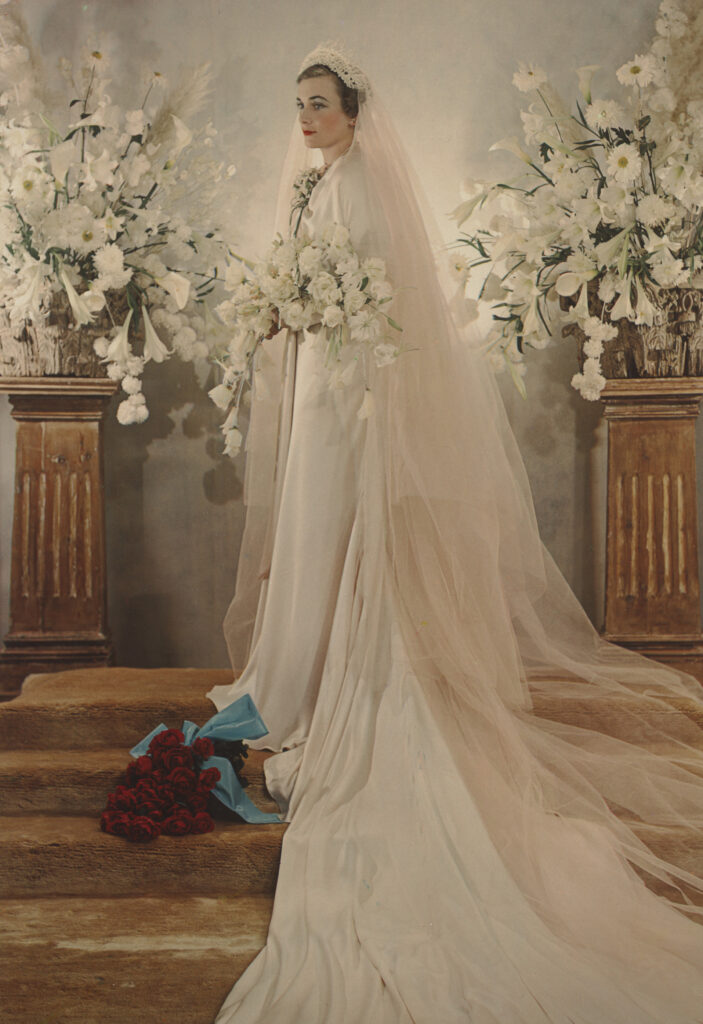
Alice’s wedding dress was clear in a photo put on show by the Royal
Collection Trust in a 2024 exhibition
Alice later recalled the proposal had been far from romantic,
writing in her memoirs that Henry ‘’mumbled it as we were on a walk
one day.’’ But both had other things on their mind. Alice, then 34,
knew that her father was dying. Henry, aged 35, was also aware of
his own father’s deteriorating health and the increasingly real
possibility that his eldest brother, Edward, might take the throne
sooner rather than later, still unmarried and with no heir of his
own. A wedding date was set for November
6th 1935.
It was against this backdrop of family illness and dynastic
discontent that Lady Alice chose her wedding gown. The papers were
filled with speculation about what kind of dress the latest royal
bride might wear and as autumn turned to winter, Alice found her
face on many of the front pages. A royal wedding, even if it was
taking place in the midst of turbulence, was a welcome diversion at
a time of economic turmoil and political upheaval at home and the
march of fascism overseas. Her choice was much debated and her pick
was quite a surprise.
By the time the wedding day arrived, the bride was actually in
mourning. Her father, the Duke of Buccleuch, had passed away on
October 19th 1935. His death meant the grand
celebration planned at Westminster Abbey was no longer possible.
Instead, Henry and Alice were married in the Private Chapel of
Buckingham Palace in front of just over 100 guests by the
Archbishop of Canterbury, Cosmo Gordon Lang.
The bride arrived accompanied by her brother, the new Duke of
Buccleuch, and eight bridesmaids, among them her groom’s nieces,
nine year old Princess Elizabeth and five year old Princess
Margaret. They were in cream satin dresses with gold sashes and
golden garlands for their hair. The bride, however, went for a far
more innovate gown.
For while Lady Alice’s wedding dress, designed by Norman
Hartnell, was simple and modest, it wasn’t white. The bride chose
instead to marry wearing a very pale shade of pink. The dress
featured a high neckline with a posy of artificial orange blossom,
long sleeves, a fitted bodice and a gently draped full length
skirt. However, the changes that had befallen Alice’s wedding plans
were evident in the train which had been designed to fill the aisle
of Westminster Abbey and which was now piled into the much smaller
chapel. The bride also wore a tulle veil but no tiara, choosing
instead a headpiece decorated with crystals. Her bouquet was made
up of white roses and lily of the valley with the traditional
myrtle, taken from a bush grown by Queen Victoria at Osborne House,
tucked amongst the blooms.
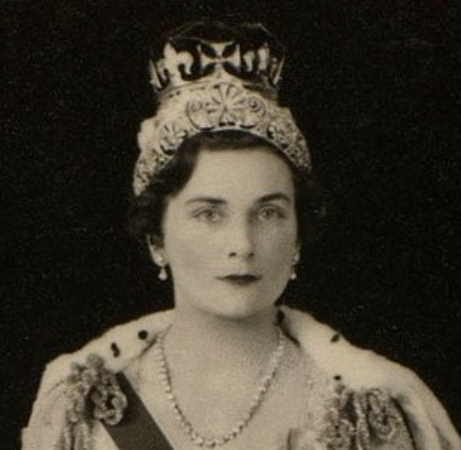
longest lived member of the Royal Family
(Hay Wrightson, Public domain, via Wikimedia Commons)
Henry and Alice appeared on the balcony of Buckingham Palace
during their reception before heading off to Northamptonshire for
their honeymoon. On their return, they began royal duties, and
within months took on more responsibility. King George V died on
January 20th 1936, less than three months after
their marriage, and within a year, Edward VIII, gave up his throne
to marry Wallis Simpson. Henry’s older brother, Bertie, became King
George VI. The royal bride who wore pink was now the wife of the
third in line to the throne. Within months, a new Regency Act
placed even more responsibility on her and her husband. It said
that should anything happen to the new king before his heir,
Elizabeth, was of age then it would be Henry who would rule for her
until she was old enough to take over.
In the meantime, the new Duke and Duchess of Gloucester became
mainstays in the monarchy that King George and his queen,
Elizabeth, worked so hard to steady.
Alice, Duchess of Gloucester said she had always wanted to be
useful and her royal role gave her that opportunity. This low key
royal wedding, on a cold November day for a family in mourning,
would prove to be a milestone for the House of Windsor.

