


Burgos is a historic city in northern Spain, located in the autonomous community of Castile and León. It sits along the Arlanzón River and lies on the famous Camino de Santiago pilgrimage route, making it an important cultural and spiritual stop for travelers. Known for its medieval charm, Burgos is best recognized for the stunning Burgos Cathedral, a UNESCO World Heritage Site and a masterpiece of Gothic architecture.
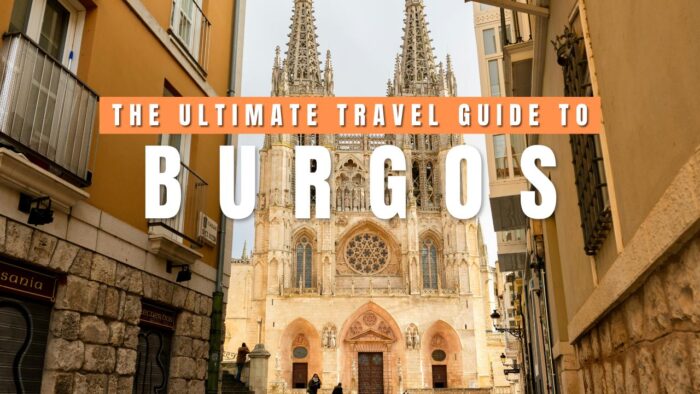
Burgos Travel Guide
The city’s history dates back to 884 AD, when it was founded as a military outpost. Over time, Burgos became a powerful political and religious center during the Middle Ages. It is also closely associated with El Cid, Spain’s legendary medieval hero, whose tomb lies in the cathedral.
Visitors come to Burgos for its rich heritage, walkable old town, and authentic Castilian cuisine, including morcilla de Burgos and local cheeses. This Burgos Spain travel guide highlights the city’s mix of history, art, and vibrant local life. Whether exploring museums, strolling ancient streets, or enjoying scenic viewpoints, this Burgos travel guide shows why the city is a rewarding and often overlooked Spanish destination.
1. Destination Overview
Burgos, Spain, is a charming medieval city in northern Spain famed for its stunning Gothic cathedral, rich history, and enduring charm. Once a significant medieval capital, it seamlessly combines historic architecture with lively plazas, scenic riverwalks, and genuine Castilian cuisine.
Strolling along its cobbled streets feels like stepping into a fairy tale. With fewer visitors than major tourist hubs, Burgos provides culture, beauty, and authenticity—making it an essential stop on any travel list.
Why Visit Burgos
- Home to the Burgos Cathedral, a UNESCO World Heritage Site
- Key stop on the Camino de Santiago (French Way)
- Birthplace and stronghold of El Cid Campeador
- Excellent traditional Castilian cuisine
- Compact, walkable historic center with few crowds
Best Time to Visit
Here’s a clear guide to the best time to visit Burgos, Spain, and why:
Spring (April–June)
- Mild, pleasant weather — great for sightseeing and walking around the historic city center.
- Fewer tourists than summer.
- Cultural events like the Festival de las Marzas in March.
Autumn (September–November)
- Comfortable temperatures and beautiful fall colors in the surrounding countryside.
- Often quieter than peak summer but still lively.
- September, especially, combines good weather with local activities.
These shoulder seasons (spring and autumn) are often considered the best overall for weather, fewer crowds, and cultural experiences.
Summer (June–August)
- Warm and sunny, with daytime highs usually under about 30 °C — comfortable for most visitors.
- A lively time with festivals such as the Fiestas de San Pedro y San Pablo in late June/early July.
Note: It’s also the busiest time, so attractions and accommodation can be pricier and more crowded.
Winter (December–February)
- Lowest tourist season — cheaper flights and hotels.
- Very cold with freezing temperatures and windy conditions, not ideal for outdoor sightseeing.
Summary: Best Months to Visit
- Top weather + fewer crowds: April–June, September–October
- Warmest and busiest: July–August
- Budget-friendly but cold: December–February
Tip: If you want a mix of good weather, local festivals, and not too many tourists, aim for late May–early June or September.
Local Secret #1: September offers the best balance—clear skies, food festivals, and fewer pilgrims than summer.
Travel Difficulty & Duration
- Difficulty: Easy
- Recommended Stay:
- 2–3 days for highlights
- 5–7 days if combining Camino experiences and the countryside

2. Essential Travel Information
Visa & Entry
- Filipinos: Require a Schengen Visa
- EU/Schengen Nationals: No visa required
- Other Nationalities: Check Schengen regulations
- The passport must be valid for at least 3 months beyond departure
Currency & Budget (USD Estimates)
- Currency: Euro (€)
- Daily Budget (excluding hotel):
- Budget traveler: $40–60
- Mid-range traveler: $70–110
- Comfortable traveler: $140+
Estimated Costs:
- Coffee: $2–3
- Menu del día: $13–18
- Pintxos + drink: $3–4
- Cathedral entry: $8–10
Language & Communication
- Language: Spanish (Castilian)
- English is spoken in hotels and tourist sites
- Basic Spanish is appreciated
Useful phrases:
- Buenos días – Good morning
- Gracias / Por favor – Thank you / Please
- La cuenta, por favor – The bill, please
Transportation
Getting There:
Here are practical ways to get to Burgos, Spain — whether you’re coming from elsewhere in Spain or from another country abroad:
From Within Spain
By Train
- Burgos is well connected by rail to major Spanish cities. You’ll arrive at Burgos Rosa de Lima station, located near the city center.
- Trains run from Madrid, Barcelona, Bilbao, San Sebastián, Valladolid, Pamplona, and other places with regular schedules.
- From Madrid, the train journey is typically 2.5–3 hours and is comfortable and scenic.
Tips: High-speed and conventional trains operated by Renfe (Spain’s national rail) usually have the best balance of speed and comfort.
By Bus
- Frequent ALSA and FlixBus services connect Burgos with many cities across Spain.
- From Madrid, buses take about 2.5–3 hours; from Bilbao, about 2 hours; and from Barcelona, around 7–8 hours, depending on the routes.
- Buses usually arrive at the city’s main Estación de Autobuses (bus station) near the center, with easy access to taxis and public transit.
By Car
Driving gives flexibility to explore the city and the countryside.
Main roads include the A-1, A-12, and A-62 autovías, which link Burgos with Madrid, Pamplona, France, and the northwest of Spain.
- Self-driving is ideal if you plan to visit rural areas or nearby cities on the way.
From Outside Spain
Fly + Train/Bus Combo
Since Burgos doesn’t have a major international airport with many scheduled passenger flights, most international visitors combine a flight to a nearby airport with a train or bus to Burgos:
Common airport + onward travel combos:
- Madrid–Barajas Airport (MAD) -> Bus or train to Burgos (~2.5-3 hours)
- Bilbao Airport (BIO) -> Bus to Burgos (~3h+)
- Santander Airport (SDR) -> Bus (~3h45m)
- Vitoria Airport (VIT) -> Train to Burgos (~2h45m)
- San Sebastián Airport (EAS) -> Train to Burgos (~4h30m)
Booking your international flight into Madrid or Bilbao generally offers more frequent onward connections and often better fares.
Arrival in Burgos
Once in Burgos:
- The main train station (Rosa de Lima) and bus station are close to the city center — easily walkable or a quick taxi ride.
- Local buses and taxis make it easy to reach your hotel or attractions.
Quick Summary
| Starting Point | Best Options |
|---|---|
| Within Spain | Train (fast, comfy) or Bus (often cheaper) |
| International visitors | Fly to Madrid/Bilbao/Santander + Train/Bus to Burgos |
| Driving | Road trip via Spanish highways |
Getting Around:
| Mode of Transport | Best For | Notes |
|---|---|---|
| Walking | Historic center, sightseeing | Compact, flat, very walkable |
| City Buses | Longer distances, stations | Affordable, regular service |
| Taxis | Late nights, luggage, quick trips | Easy to find in central areas |
| Bikes (BiciBur) | Short, scenic rides | Public bike-sharing available |
| Car | Day trips outside the city | Not needed in the center |
Pro Tip #2: Stay near the cathedral or riverfront—you’ll rarely need transport.
3. Top Attractions & Experiences
Must-See Landmarks

Burgos Cathedral
Burgos Cathedral, a magnificent UNESCO World Heritage Site, graces the historic center of Burgos in northern Spain. The cathedral’s construction began in 1221 under King Ferdinand III and unfolded over several centuries, showcasing a captivating blend of French Gothic architecture, complemented by Renaissance and Baroque elements.
This architectural marvel is celebrated for its soaring ornate spires and intricate stonework, which draw the eye upward to its grand interior. The cathedral is the resting place of El Cid, Spain’s legendary medieval hero, adding a layer of historical significance to its beauty. Among its many impressive features are the stunning Golden Staircase, the remarkable star-shaped dome, and richly adorned chapels, each telling a story of devotion and artistry. Burgos Cathedral stands as one of Spain’s most treasured religious and architectural landmarks, inviting visitors to marvel at its splendor and rich heritage.

Monasterio de las Huelgas
The Monasterio de las Huelgas is a stunning historic Cistercian monastery located just west of Burgos’s vibrant city center, nestled along the tranquil Arlanzón River. Founded in 1187 by the visionary King Alfonso VIII and his wife, Queen Eleanor of England, the monastery quickly rose to prominence as one of medieval Spain’s most important religious institutions.
As a royal pantheon, the monastery is the final resting place for numerous Castilian monarchs, each tomb echoing the rich history of Spain’s regal lineage. It served not only as a spiritual refuge but also as a formidable center of political influence, weaving together the threads of power and faith. The architecture of the monastery is a remarkable tapestry, showcasing a harmonious blend of Romanesque, Gothic, and Mudéjar styles, all reflecting the creative spirit and artistry of the centuries during which it was built and expanded.
A particularly fascinating aspect of the Monasterio de las Huelgas is the exceptional authority held by its abbess, who wielded remarkable judicial and military powers, underscoring the significant role of women in the religious and political spheres of the time. Today, the monastery stands as a treasured national heritage site and museum, inviting visitors to explore its rich history through an impressive collection of medieval textiles, intricately crafted armor, and the ornate royal tombs that tell the stories of a bygone age.

Arco de Santa María
The Arco de Santa María is a monumental medieval gate located in Burgos, Spain, next to the Arlanzón River and near the city’s famous cathedral. It was originally built in the 14th century as part of the city’s defensive walls and was later remodeled in the 16th century into an ornate ceremonial entrance.
The façade features statues of significant historical figures associated with Castile, including El Cid, Charles V, and Fernán González. Above the central arch, there is a statue of the Virgin Mary, which gives the gate its name. Today, the Arco de Santa María functions as an exhibition space and cultural venue, symbolizing Burgos’s medieval strength and Renaissance artistic influence.
Hidden Gems & Local Favorites

Paseo del Espolón
Paseo del Espolón is an elegant riverside promenade in Burgos, established in the late 18th century and redesigned in the 19th century to reflect the urban ideals of the Enlightenment. The promenade is lined with plane trees, flowerbeds, kiosks, and historic cafés, connecting the old town to modern districts along the Arlanzón River.
Locals enjoy strolling, socializing, and attending open-air concerts, markets, and festivals in this vibrant space. You can also admire monuments, watch people, relax on benches, enjoy ice cream, or take walks toward the Cathedral and nearby parks.
Paseo del Espolón remains a beloved civic meeting place and cultural hub for daily life, celebrations, and quiet reflection along the river, attracting visitors year-round.

Museo de la Evolución Humana
The Museo de la Evolución Humana (MEH), located in Burgos, Spain, opened its doors in 2010 and offers a comprehensive exploration of human origins and prehistory. The museum features an array of fossils and exhibits linked to the nearby Sierra de Atapuerca archaeological sites, which are designated as a UNESCO World Heritage site. Designed by Juan Navarro Baldeweg, the museum’s striking modern architecture serves as the focal point of the Human Evolution Complex.
MEH’s permanent exhibits encompass a diverse range of subjects, including biological evolution, cultural milestones, and ancient ecosystems. Visitors can view original fossils, such as those of Homo antecessor, and engage with interactive reconstructions. With four floors of exhibits, the museum provides guided tours and hosts temporary exhibitions, allowing guests to deepen their understanding of human evolution over millions of years. In addition, the museum offers educational programs and special events to further enrich the visitor experience.

Mirador del Castillo
Mirador del Castillo in Burgos, Spain, is a scenic lookout atop the Castillo de Burgos, a medieval fortress founded in 884 that once defended the city. Although the castle now stands mostly in ruins, the mirador offers spectacular 360° panoramic views of Burgos, including its iconic cathedral, historic center, and surrounding landscape.
Visitors can reach the mirador by taking a pleasant uphill walk through Parque del Castillo, starting near the cathedral. It is a popular spot for photography, sunsets, and identifying landmarks, thanks to informative plaques at the viewpoint. Additionally, nearby attractions include exploring the castle ruins, strolling through the park, or relaxing at a café after the climb.
Unique Burgos Experiences
- Walking a stretch of the Camino de Santiago at dawn
- Evening paseo with locals along the Arlanzón River
- Traditional Castilian lunch with slow courses
Local Secret #3: Visit the cathedral at opening time—it’s quieter and spiritually powerful.
For more attractions and places to visit in Burgos, Spain, read our Top 15 Things to do in Burgos, Spain.
Photography Hotspots
- Cathedral spires from Plaza del Rey San Fernando
- River reflections at sunset
- Castle Hill viewpoints
4. Accommodation Recommendations
Budget-Friendly ($50–100/night)

Hotel Bulevar – Avenida del Cid
This hotel is a reliable and comfortable choice, particularly favored by pilgrims and road travelers. The rooms are spacious, clean, and quiet, providing effective insulation against street noise.
Conveniently located just a short walk from the cathedral and Old Town, the hotel offers friendly and efficient service. It also offers on-site parking, a rare find in historic cities. While it may not be a boutique hotel, it delivers excellent value, especially for those who prioritize comfort and location.
Mid-Range ($100–250/night)

NH Collection Palacio de Burgos – Calle Merced
Situated beside the river in a former 16th-century monastery, this elegant hotel combines historic architecture with modern amenities. The rooms are spacious, refined, and quiet, creating a peaceful atmosphere while remaining central and convenient for exploring on foot.
The service is professional, and the breakfast is excellent. This hotel is perfect for travelers seeking comfort, character, and a strong sense of place.
Luxury ($250+/night)

Landa Palace Hotel – Carretera Madrid-Irún (outside center)
Landa Palace is a luxurious hotel resembling a grand castle, located just outside of Burgos. It offers an immersive Castilian experience, with opulent rooms featuring heavy wooden furnishings and classic decor.
The hotel is known for its esteemed restaurant, and the indoor pool is a notable highlight. It is ideal for travelers with a car or those looking for a retreat-style stay that combines a historic ambiance with refined dining.
Alternative Accommodations
- Pilgrim hostels (albergues) along the Camino ($15–30/night)
- Airbnb apartments near Old Town or the river
5. Food & Dining Guide
Must-Try Local Dishes

Morcilla de Burgos
Burgos’ most famous dish is the blood sausage known as morcilla. This dish is made with rice, onions, and a blend of spices. Unlike the heavier versions found in other regions, the Burgos morcilla is aromatic, slightly sweet, and deeply satisfying.
It is typically grilled or pan-fried and served as a tapa or starter. Locals take great pride in this dish, and once you try a good version, you’ll understand why.

Lechazo Asado (Roast Lamb)
A classic dish from Castile: milk-fed lamb, slow-roasted in a wood-fired oven with just salt and water. The result is tender meat with a crisp skin—rich yet delicate.
Traditionally enjoyed at lunch and shared among diners, this dish reflects Burgos’s rural heritage and a deep respect for quality ingredients.

Queso de Burgos
A fresh, soft cheese made from cow’s or sheep’s milk. It is mild, creamy, and slightly sweet, often served with honey or quince paste. This cheese is simple, refreshing, and representative of Burgos’ dairy traditions.
Restaurant Recommendations
Casa Ojeda – Calle Vitoria
A historic restaurant serving traditional Castilian cuisine since 1912. Known for roast lamb, morcilla, and hearty stews. The atmosphere is classic and welcoming. Prices range from $25 to $ 45 per person. Ideal for experiencing Burgos’ culinary heritage.
Mesón Los Herreros – Calle San Lorenzo
A favorite among locals for generous portions and authentic flavors. Casual, lively, and affordable. Excellent morcilla and daily specials. Expect $15–25 per person. Great value and atmosphere.
Gaona Jardín – Calle San Juan
A more modern dining option with seasonal menus and elegant presentation. Set in a charming garden space, it offers refined takes on regional cuisine. Prices range from $30 to $ 50. Perfect for a relaxed but special evening.
Street Food Tip: Burgos is about bars and taverns—stick to the busy spots for fresher food.
Dietary Needs: Vegetarian options are limited in traditional restaurants but are improving; ask in advance.
6. Local Culture & Etiquette
Burgos exemplifies traditional Castilian values, characterized by a reserved and polite demeanor, with a deep sense of respect for others.
- Greetings tend to be warm yet understated; handshakes are common in both casual and formal encounters, while close friends often exchange two cheek kisses as a sign of familiarity.
- Punctuality is highly valued, particularly in professional environments, as it reflects respect for others’ time.
- Locals place a strong emphasis on good manners; using polite expressions such as “por favor” (please) and “gracias” (thank you) is considered essential in daily interactions.
- Meals in Burgos are social occasions enjoyed at a leisurely pace. Lunch generally serves as the main meal of the day, often involving multiple courses, while dinner is typically served late in the evening.
- While tipping is not obligatory, it is customary to leave a small tip to show appreciation.
- Dress codes tend to be neat and modest, especially when visiting churches or religious sites, where respectful attire is expected.
- The community holds deep respect for its history, family values, and local traditions, which are reflected in daily life, festivals, and local celebrations.
Local Secret #4: Sundays are for family lunches—restaurants fill quickly; reserve ahead.
7. Practical Tips & Safety
Health & Safety
- Very safe city
- Winters are cold—dress warmly
- Tap water is drinkable
What to Pack
- Comfortable walking shoes
- Warm layers (evenings can be cold year-round)
- Rain jacket in spring/fall
Money-Saving Tips
- Menu del día lunches
- Free walking routes and parks
- Museum discounts
Emergency
Essential Phrases
- ¿Dónde está…? – Where is…?
- Una copa de vino, por favor – A glass of wine, please
Local Secret #5: Visit museums mid-afternoon—locals are at lunch, and crowds disappear.
8. Suggested Itineraries
3-Day Express
Day 1: Cathedral, Old Town, river walk
Day 2: Monasteries, Museum of Human Evolution
Day 3: Castle Hill, local markets, long lunch
7-Day Comprehensive
- Camino de Santiago day walks
- Day trips to Covarrubias and Lerma
- Slow food and wine exploration
Off-the-Beaten-Path
- Village bakeries outside the center
- Quiet pilgrim routes
- Riverside cycling paths
A Final Invitation
Burgos is a city that rewards travelers who take the time to explore it. From its remarkable Gothic cathedral to its quiet streets, scenic viewpoints, and deep historical roots, Burgos offers a balanced mix of culture, tradition, and everyday Spanish life.
It is walkable, welcoming, and refreshingly authentic, without the crowds of larger tourist destinations. Whether you’re interested in history, food, architecture, or simply discovering a place that feels genuine, Burgos delivers. It’s a city that doesn’t try to impress—it simply does.
For travelers seeking substance, heritage, and a strong sense of place, Burgos is well worth the visit. Add it to your itinerary, stay awhile, and see why this Castilian city continues to quietly stand out.
Madrid Travel Tour Packages You Should Try
Follow and subscribe to OutofTownBlog.com on Facebook , Twitter, Instagram, Pinterest, and YouTube for more Travel-related updates.
Read:

