


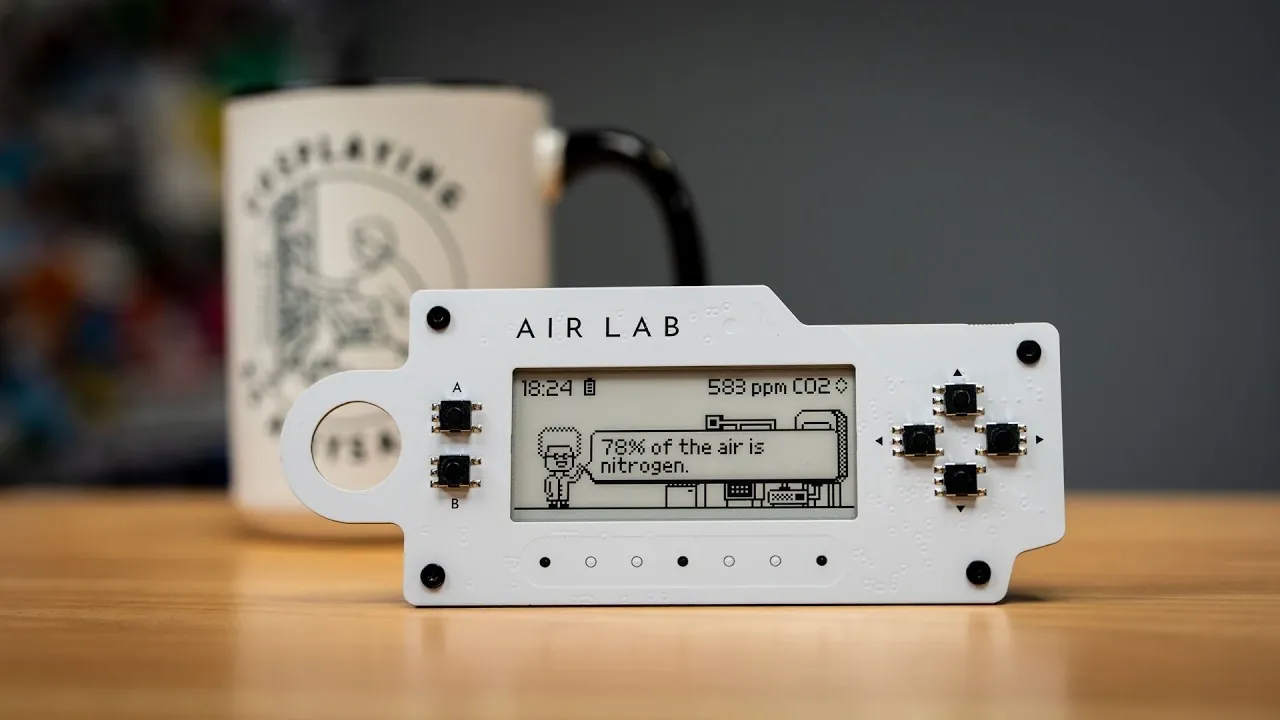
Have you ever wondered what’s really in the air you breathe? From invisible pollutants to subtle environmental shifts, the quality of our air impacts everything from our health to our productivity. Enter the Air Lab, a device that’s being hailed as the “Flipper Zero of air quality monitors” for its bold, open-access approach to environmental data. Much like the Flipper Zero disrupted the world of portable hacking tools, the Air Lab is challenging the status quo of air quality monitoring by putting data transparency and user control front and center. But is it a fantastic option or just another niche gadget? At $250, it promises portability, a robust sensor suite, and a design that appeals to both tech enthusiasts and professionals. Yet, its price and some missing features raise important questions about its value.
Below Jeff Geerling takes you through what makes the Air Lab stand out in a crowded market, from its open data access to its unique educational features. You’ll uncover how this portable device measures key air quality metrics like carbon dioxide, nitrogen oxides, and volatile organic compounds, while also integrating seamlessly with smart home ecosystems. But it’s not all smooth sailing, limitations like the absence of a particulate matter sensor and occasional firmware bugs may give some users pause. Whether you’re a data-driven professional, a curious hobbyist, or someone simply looking to breathe easier, this deep dive will help you decide if the Air Lab is the right fit for your needs, or if its bold claims fall just short of the mark.
Portable Air Quality Monitor
TL;DR Key Takeaways :
- The Air Lab is a $250 portable air quality monitor designed for enthusiasts and professionals, measuring CO2, NOx, VOCs, temperature, humidity, and atmospheric pressure.
- It emphasizes open data access, allowing users to log and export data locally without relying on proprietary cloud platforms, and supports real-time data publishing via MQTT for smart home integration.
- Key features include an exposed PCB design, e-paper display, rechargeable battery with up to 5 days of use, and an educational “air professor” feature for understanding air quality metrics.
- While it offers robust functionality and portability, its high price and lack of a particulate matter (PM) sensor may limit its appeal for users seeking comprehensive air quality monitoring.
- The Air Lab is ideal for tech-savvy users and professionals who value data transparency and flexibility, but it may not suit budget-conscious buyers or those needing lab-grade accuracy and PM monitoring.
Key Features and Design
The Air Lab is equipped with a comprehensive suite of sensors, allowing it to monitor multiple air quality metrics effectively. These include:
- Carbon dioxide (CO2): A critical indicator of indoor air quality, especially in enclosed spaces.
- Nitrogen oxides (NOx): Common pollutants from combustion processes, such as vehicle emissions.
- Volatile organic compounds (VOCs): Harmful chemicals often found in household products and industrial environments.
- Temperature: Essential for understanding thermal comfort and environmental conditions.
- Humidity: A key factor in air quality, affecting respiratory health and comfort.
- Atmospheric pressure: Useful for weather-related monitoring and analysis.
The device’s exposed PCB design is a deliberate choice, appealing to users who value transparency in hardware. Its e-paper display ensures clear, low-power visualization of real-time data, making it easy to interpret readings at a glance. Additionally, the built-in “air professor” feature provides educational insights, helping users understand the significance of the metrics being measured. The Air Lab is powered by a rechargeable battery that lasts up to five days on a single charge, enhancing its portability and making it suitable for use in diverse environments, from homes and offices to outdoor spaces.
Data Accessibility: A Standout Feature
One of the Air Lab’s most compelling attributes is its commitment to open data access, a feature that sets it apart from many competitors. Unlike other air quality monitors that rely on proprietary cloud platforms, the Air Lab logs data locally and allows unrestricted export. This ensures that users maintain full control over their environmental data, a significant advantage for those who prioritize privacy and flexibility.
The device supports real-time data publishing via Wi-Fi using the MQTT protocol, allowing seamless integration with platforms like Home Assistant. This makes it an excellent choice for users who want to incorporate air quality monitoring into their smart home ecosystems. Configuration is managed through AirLab Studio, a web-based application that simplifies setup and customization. This open approach to data handling is particularly appealing to tech-savvy users and professionals who require transparency and adaptability in their devices.
The Flipper Zero of Air Quality Monitors

Below are more guides on air quality monitors from our extensive range of articles.
How It Stacks Up Against Competitors
The Air Lab occupies a unique position in the air quality monitor market, offering a blend of features and portability that few competitors can match. Here’s how it compares to some notable alternatives:
- Air Gradient One ($230): While offering similar functionality, it lacks the portability and battery-powered operation of the Air Lab, making it less versatile for on-the-go use.
- DIY Solutions: These are often more affordable but require significant technical expertise to assemble and configure. They also lack the polished user experience and educational features of the Air Lab.
- M2000C: A specialized device with a higher price tag, it offers limited data accessibility and focuses on niche applications, making it less appealing to general users.
The Air Lab’s combination of portability, open data access, and a user-friendly interface makes it a standout option. However, its $250 price tag may deter budget-conscious users, and the absence of a particulate matter (PM) sensor limits its appeal for those seeking comprehensive air quality monitoring.
Performance and Usability
The Air Lab delivers a user-friendly experience, with an intuitive setup process assistd by AirLab Studio. However, users should note that the device requires calibration to ensure accurate readings. While its measurements are precise, they do not achieve lab-grade accuracy, which may be a consideration for professionals requiring highly detailed data.
The device’s educational features, such as the “air professor,” provide valuable insights into how air quality impacts health, productivity, and overall well-being. This is particularly relevant in enclosed spaces like vehicles, offices, or crowded events, where poor air quality can significantly affect comfort and alertness. However, the configuration process is restricted to specific web browsers, which could inconvenience some users.
Limitations to Consider
Despite its many strengths, the Air Lab has some notable limitations that potential buyers should consider:
- High Price: At $250, it is more expensive than many alternatives, which may limit its accessibility to budget-conscious users.
- Missing PM Sensor: The absence of a particulate matter sensor restricts its ability to provide a complete picture of air quality, particularly in areas affected by dust, smoke, or other fine particles.
- Firmware Bugs: While the manufacturer addresses these issues promptly, they may affect user confidence and the overall experience.
These drawbacks may make the Air Lab less appealing to users seeking a more affordable or feature-complete solution. However, for those who prioritize data transparency and portability, it remains a compelling option.
Who Should Consider the Air Lab?
The Air Lab is best suited for enthusiasts and professionals who value open-access devices and full control over their data. Its portability and educational features make it an excellent choice for users who need a versatile, on-the-go air quality monitor. It is particularly appealing to those who want to integrate air quality monitoring into their smart home systems or who require a device that prioritizes transparency and flexibility.
However, its high price and lack of certain features, such as a particulate matter sensor, may limit its appeal to a broader audience. For users who need a more affordable or comprehensive solution, alternatives may be worth exploring.
Media Credit: Jeff Geerling
Filed Under: Gadgets News, Hardware
Latest Geeky Gadgets Deals
Disclosure: Some of our articles include affiliate links. If you buy something through one of these links, Geeky Gadgets may earn an affiliate commission. Learn about our Disclosure Policy.

