


Construction work was halted and emergency pollution curbs reimposed across India’s capital on Monday after the air quality deteriorated sharply to some of the worst levels seen this winter, exposing millions to hazardous smog and disrupting flights.
The air quality index was 493 at 7am on Monday, according to the Central Pollution Control Board, placing Delhi firmly in the “severe” category.
Several parts of the city recorded readings close to the maximum of the scale, with Rohini hitting 500, Ashok Vihar 499, Anand Vihar 493, and RK Puram 477 under a scale used by the pollution board. Swiss air quality monitor IQAir showed readings of 800 and above in many areas, however.
India’s air quality monitoring system classifies a reading above 401 as “severe”, a level associated with serious respiratory risks even for healthy people. For comparison, an AQI below 50 is considered “good”.
The sudden in pollution spike prompted authorities to activate Stage IV of the Graded Response Action Plan, the toughest set of emergency measures to curb pollution, across Delhi and neighbouring areas, together home to around 30 million people.
The measures include a ban on construction activity, including at public infrastructure projects, a halt to the entry of older diesel trucks into the capital and online classes for students.
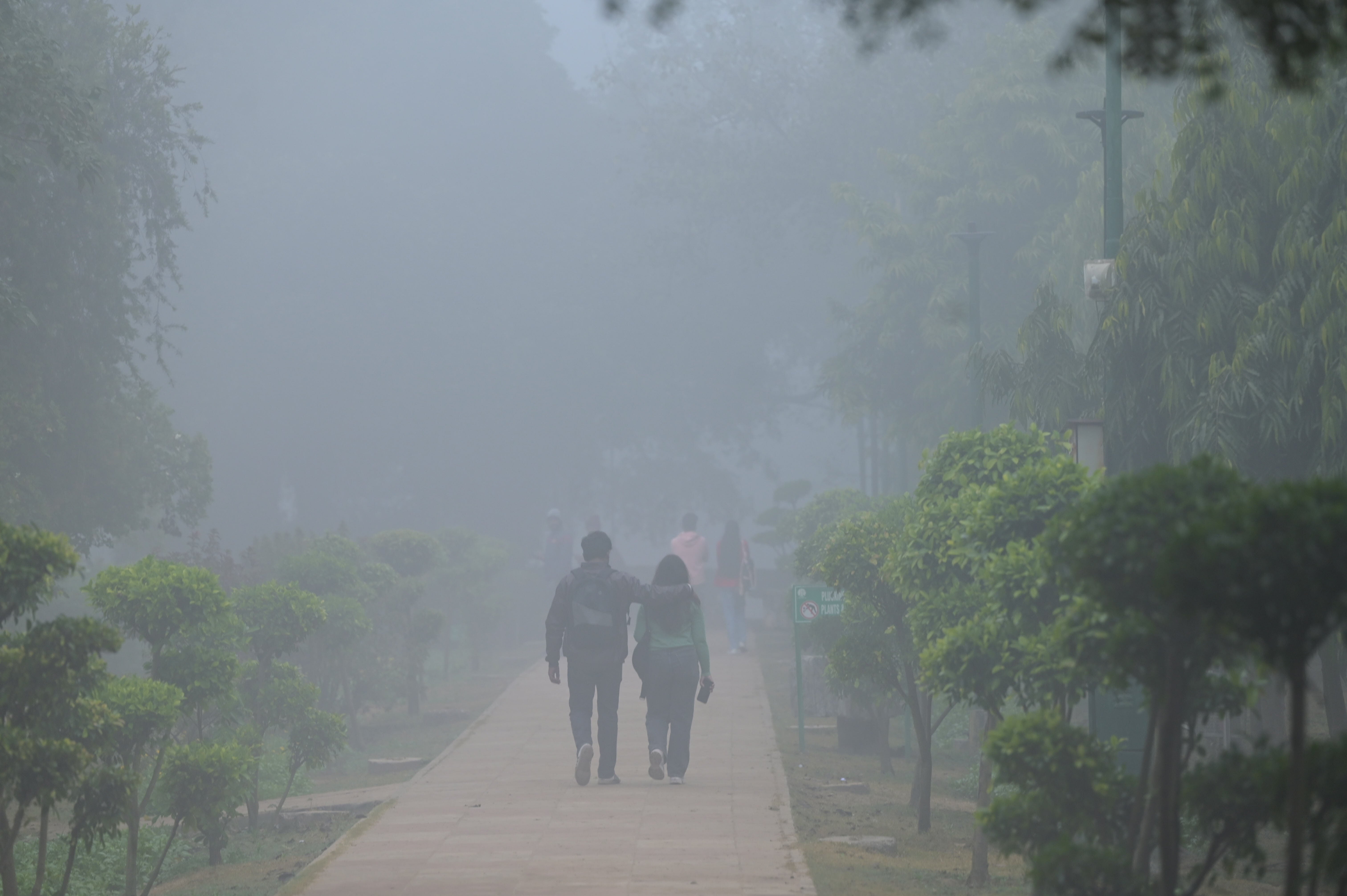
India’s environment ministry said that the restrictions were necessitated by air quality worsening rapidly over the weekend.
The Commission for Air Quality Management said the deterioration was driven by high moisture levels and a shift in wind direction trapping pollutants close to the ground and allowing smog to build up, Reuters reported.
Dense fog on Monday morning also reduced visibility, slowing traffic and disrupting air travel.
The Delhi airport issued a passenger advisory warning of possible delays while airlines including IndiGo said flight schedules could be affected by low visibility.
The Chief Justice of India advised lawyers and litigants to use hybrid hearings at the Supreme Court, citing the health risks posed by the pollution.
Authorities urged residents to stay indoors as much as possible, particularly children, older people and those with respiratory or cardiac conditions, and advised the use of masks outside.
Delhi experiences extreme air pollution almost every winter as cold, stagnant air traps emissions from vehicles, construction sites and coal power plants, as well as pollutants from the burning of crop residues in neighbouring states.
Doctors in the city routinely warn that prolonged exposure can worsen asthma, cause heart problems and increase hospital admissions.
The India Meteorological Department issued a yellow alert for fog after forecasting calm winds to persist through the week – conditions that typically prevent pollution from dispersing – prompting Delhi authorities to announce that the emergency curbs would remain in place until air quality showed sustained improvement.
Activists and critics argue that emergency curbs do little to address deeper structural causes such as traffic growth, construction dust and regional farm fires.

