


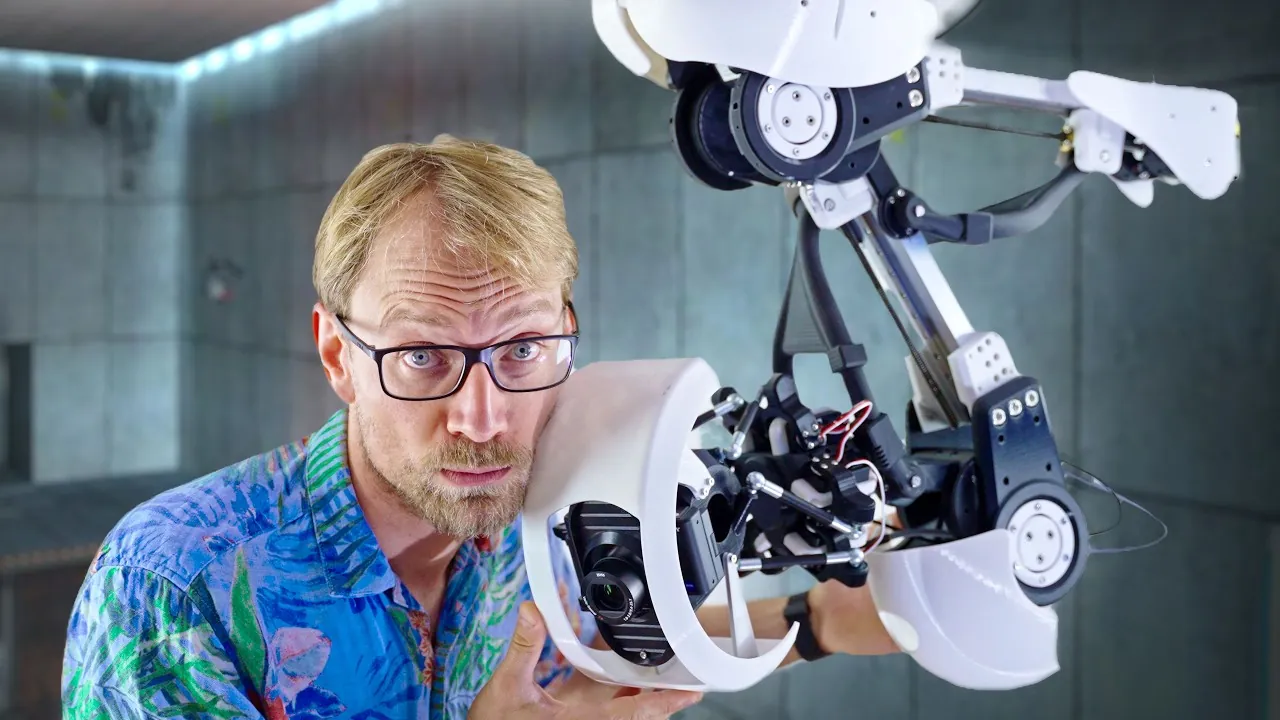
What if building a robotic arm didn’t require a massive budget or a team of engineers? Imagine a device capable of delivering smooth, precise movements for studio applications, constructed for less than the cost of a high-end smartphone. Enter Caroline, a low-cost robotic arm project that’s redefining what’s possible in robotics. Inspired by the iconic GLaDOS from Portal 2, Caroline combines creative engineering with accessible materials like 3D-printed components and lightweight aluminum tubing. The result? A machine that challenges the notion that advanced robotics must come with a hefty price tag. But how does it all come together, and what makes this project so new?
Thomas Sanladerer explains how the Caroline robotic arm achieves the delicate balance between precision and affordability. You’ll discover the innovative design choices, like repurposed 3D printer components and custom software, that make this robotic arm both functional and budget-friendly. Along the way, we’ll uncover the challenges faced during development, from joint rigidity to torque management, and how clever problem-solving turned obstacles into opportunities. Whether you’re a robotics enthusiast, a small studio owner, or simply curious about the future of accessible technology, Caroline offers a fascinating glimpse into how resourceful design can provide widespread access to advanced engineering. Could this be the blueprint for the next wave of affordable robotics?
Affordable Precision Robotics
TL;DR Key Takeaways :
- The Caroline project aims to create an affordable yet precise robotic arm for smooth camera movements, with a total material budget of approximately €500.
- Key design features include 3D-printed components, lightweight aluminum tubing, digital servo motors, and magnetic encoders for precision and durability.
- Innovative engineering solutions, such as reinforced joints, a custom zero-tolerance base, and torque management mechanisms, address challenges of cost and material limitations.
- Advanced software integration, including custom inverse kinematics and repurposed 3D printer components, ensures smooth and accurate motion control.
- Future developments aim to enhance functionality with modular components, improved motors, and expanded applications in fields like medical devices and industrial automation.
Project Goals: Precision Meets Affordability
The Caroline project was conceived with a clear objective: to create a robotic arm capable of delivering precise and smooth camera movements while maintaining a low production cost. With a total material budget of approximately €500, the project emphasizes affordability without sacrificing essential functionality. Key goals include:
- Precision: Making sure smooth and accurate movements suitable for professional studio environments.
- Affordability: Reducing costs by using accessible materials and components.
- Modularity: Designing the arm to be easily customizable and upgradeable for various applications.
- Accessibility: Making advanced robotics attainable for a broader audience, including hobbyists and small studios.
By prioritizing these goals, the Caroline project bridges the gap between high-performance robotics and budget-conscious design.
Design and Materials: Balancing Cost and Performance
Caroline’s design is inspired by the Stewart platform, a mechanism known for its six degrees of freedom, which allows for versatile and precise motion. The materials and components were carefully chosen to balance cost, durability, and performance, making sure the arm could meet the demands of studio applications. Key design elements include:
- 3D-Printed Components: The extensive use of 3D printing enables intricate designs, rapid prototyping, and significant cost savings. This approach also allows for easy customization and repair.
- Aluminum Tubing: Lightweight yet strong, aluminum tubing provides the structural stability needed for the arm while minimizing weight, which is crucial for smooth operation.
- Digital Servo Motors: These motors deliver the precise and smooth movements required for camera control, making sure professional-quality results.
- Magnetic Encoders: These components enable accurate position tracking, making sure the arm’s movements are both precise and repeatable.
This thoughtful combination of materials and components ensures that Caroline is both functional and durable, even under demanding conditions.
Low-Cost Robotics : The Story Behind Caroline’s Groundbreaking Design

Here is a selection of other guides from our extensive library of content you may find of interest on robot arms.
Overcoming Engineering Challenges
Developing a robotic arm on a limited budget presents numerous engineering challenges, from material limitations to mechanical stability. The Caroline project tackled these obstacles with innovative solutions, demonstrating how resourceful engineering can overcome constraints:
- Joint Rigidity: Reinforced 3D-printed parts and ball bearings were incorporated to enhance joint stability and reduce wear over time, making sure long-term reliability.
- Base Stability: A custom zero-tolerance base bearing was designed to handle high forces, keeping the arm stable during operation and preventing unwanted vibrations.
- Torque Management: A scissor-lift mechanism was introduced to reduce the torque demands on the motors, improving efficiency and reducing strain on the components.
- Material Limitations: Challenges with printed threads and tolerances were addressed through iterative design and testing, making sure a precise and reliable final product.
These solutions highlight the importance of creative problem-solving in achieving high performance with low-cost materials.
Motion Control and Software Integration
Achieving precise motion control is critical for the success of any robotic arm, and Caroline is no exception. The project integrates advanced software and hardware to ensure smooth and accurate movements, even with budget-friendly components. Key innovations include:
- Custom Inverse Kinematics (IK): Algorithms were developed to calculate precise head positioning, allowing the arm to track motion accurately and execute complex movements.
- Smoother Step Acceleration Curves: These curves ensure fluid motion, minimizing vibrations and abrupt transitions that could disrupt camera stability.
- Repurposed 3D Printer Components: Stepper motors and mainboards salvaged from 3D printers were reused to cut costs while maintaining performance, showcasing the potential of recycling existing technologies.
This integration of software and hardware demonstrates how cost-effective solutions can still deliver professional-grade performance.
Performance and Limitations
Caroline successfully delivers a functional robotic arm capable of precise motion control and a rigid structure. However, like any project, it has its limitations:
- Range of Motion: The compact design limits the arm’s range, though future iterations could incorporate ceiling-mounted tracks or other mechanisms to expand its capabilities.
- Motor Performance: While stepper motors are cost-effective, upgrading to brushless DC motors could enhance efficiency, speed, and overall performance.
Despite these constraints, Caroline achieves an impressive balance between cost and functionality, making it a valuable tool for studio applications.
Future Directions for Caroline
The Caroline project lays the groundwork for further advancements in low-cost robotics. Potential areas for future development include:
- Interchangeable Components: Developing modular heads, arms, or grippers to expand the arm’s functionality for different tasks.
- Enhanced Motors: Exploring the use of brushless DC motors to improve motion control, efficiency, and overall performance.
- Technical Refinements: Conducting deeper analyses of specific design and engineering decisions to optimize the system further.
- Expanded Applications: Adapting the design for other uses, such as medical devices, industrial automation, or educational tools.
These advancements could transform Caroline into a versatile and highly capable robotic platform, opening up new possibilities for low-cost robotics in various fields.
Media Credit: Made with Layers (Thomas Sanladerer)
Filed Under: Design News, Gadgets News, Hardware, Top News
Latest Geeky Gadgets Deals
Disclosure: Some of our articles include affiliate links. If you buy something through one of these links, Geeky Gadgets may earn an affiliate commission. Learn about our Disclosure Policy.

