


Ukrainian soldier Pavlo Martsenyuk has lost count of the friends and comrades he’s lost since Russia launched its full-scale invasion of his country almost four years ago. The 34-year-old says he does his best to keep alive the memories of the men he fought alongside.
Speaking from a rehabilitation center in the western city of Lviv called “Unbroken Hospital,” he told CBS News about the long, painful process of recovering from the impact of an anti-tank mine explosion that robbed him of his sight in both eyes.
“I couldn’t calm myself down and control my stream of thoughts,” Martsenyuk said. “Everything was buzzing, until I started working actively with my mental health.”
A year on, doctors have reconstructed his face and he’s adapting to what he calls “an entirely new life.”
CBS News 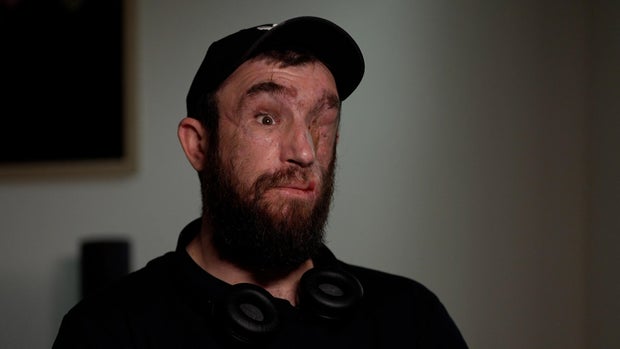
Martsenyuk says his priority now is to carry on as a civilian and serve as an example to his children. He’s also a living example of the human costs of Russia’s ongoing invasion, and he believes many people outside Ukraine don’t really understand his country’s sacrifice, or the broader importance of its fight.
President Trump’s son-in-law Jared Kushner and special envoy Steve Witkoff were due to meet Russia’s Vladimir Putin on Tuesday in Moscow to discuss a U.S.-backed proposal to end the war. Ukrainian President Volodymyr Zelenskyy, meanwhile, is holding meetings with various European leaders in the hope of shoring up continued support for his country’s defense.
Details from the high-level discussions remain vague, but one key obstacle to a deal that has emerged is Ukraine’s resistance to a Trump administration proposal for it to accept ceding some territory to Russia in exchange for peace.
Mr. Trump argued over the weekend that his peace proposal did include Russia “making concessions.”
“They’re big concessions,” he told reporters. “They stop fighting, and they don’t take any more land.”
Zelenskyy and some of his European supporters have spoken out against this approach, arguing that granting Russia dominion over any currently occupied Ukrainian land would set a dangerous precedent, effectively rewarding Putin for a unilateral, unprovoked invasion.
Courtesty of Pavlo Martsenyuk 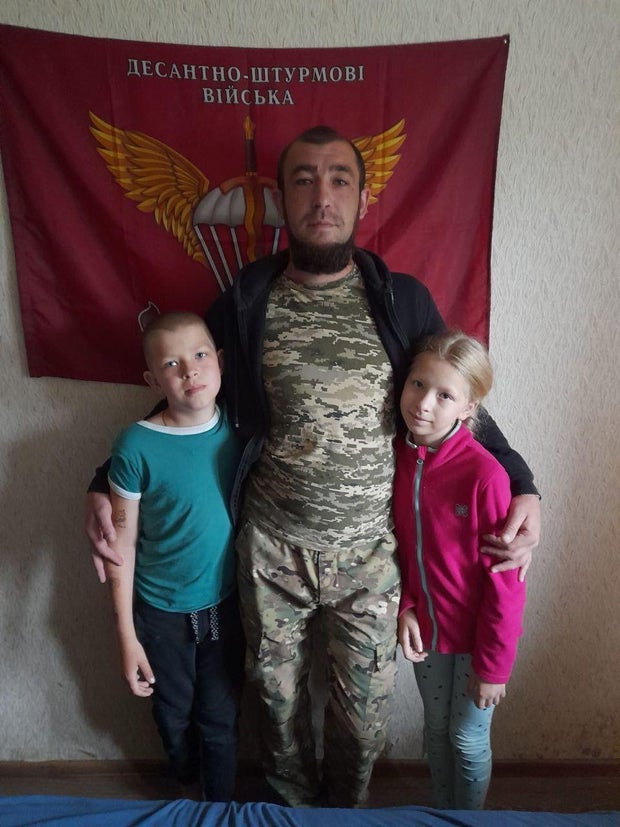
For Martsenyuk, who bears the scars of this long conflict, it’s a difficult question.
“We have already given up territory — we have given part of ourselves. How much more can we give?” he asks.
European leaders, including Poland’s, have recently alluded to the risks highlighted by Europe’s 20th century history of appeasing the unilateral landgrabs of autocrats.
“Can’t we analyze history? It all smells like something done before,” Martsenyuk said.
In late October, with President Trump pushing hard for Ukraine to make concessions to get a peace deal done — though without any clear requests for Russia to bend on its key demands — Polish Minister Donald Tusk warned: “None of us should put pressure on Zelenskyy when it comes to territorial concessions.”
“We should all put pressure on Russia to stop its aggression. Appeasement never was a road to a just and lasting peace,” said the social media post by Tusk — whose nation was occupied by Nazi Germany during World War II.
But Martsenyuk is also keenly aware that with the high cost being paid by his country every day, Ukraine will need help to continue withstanding Russia’s onslaught, let alone repel it.
Ukrainian authorities have not released official numbers of soldiers killed in combat since the start of the invasion, but an investigation released in June by the Center for Strategic and International Studies estimates that between 60,000 and 100,000 of the country’s troops have died.
“Pity is not needed,” he said. “Understanding is needed. There is very little understanding.”

