


The Repo Market: Collateralized Short-Term Funding
The repurchase agreement market represents the primary funding mechanism for financial institutions requiring overnight or short-term cash. In a repo transaction, one party sells securities to another with an agreement to repurchase them at a specified price on a future date, typically the next day. The difference between the sale and repurchase price represents the interest rate, known as the repo rate.
This mechanism serves multiple functions simultaneously. Banks and broker-dealers use repos to finance their securities inventories without selling assets outright. Money market funds and other cash-rich entities deploy excess funds overnight, earning returns slightly above zero while maintaining liquidity. The structure provides secured lending, with the securities serving as collateral, theoretically reducing credit risk compared to unsecured interbank lending.
The repo market’s scale exceeds $4 trillion daily in the United States alone. Treasury securities dominate as collateral, though mortgage-backed securities and corporate bonds also circulate through these channels. The Federal Reserve itself conducts repo operations to implement monetary policy, adding or draining reserves from the banking system through these temporary transactions.
The critical feature distinguishing repos from traditional loans is the collateral mechanism and overnight tenor. Repos represent secured financing with minimal counterparty risk, at least in theory. The short duration means positions must be continuously rolled over, creating refinancing risk if market conditions deteriorate. This vulnerability manifested dramatically during the 2008 financial crisis when repo markets froze, leaving institutions unable to fund their positions despite holding securities as collateral.

The FX Swap Market: Currency Management Without Spot Exposure
Foreign exchange swaps operate on different principles serving distinct purposes. In an FX swap, two parties exchange currencies at the spot rate and simultaneously agree to reverse the transaction at a future date using a predetermined forward rate. This mechanism allows entities to obtain foreign currency for specific periods without incurring spot exchange rate risk on the principal amounts.
The scale dwarfs even the repo market. The Bank for International Settlements estimates daily FX swap turnover exceeds $5 trillion globally, making it the largest financial market by transaction volume. This market operates continuously across time zones, with London, New York, Tokyo, and Singapore serving as primary centers.
Corporations use FX swaps to hedge currency risk on foreign operations or transactions. A U.S. company expecting euro-denominated revenue in three months can swap dollars for euros today and reverse the transaction when the revenue arrives, locking in the exchange rate. Banks use FX swaps to manage their currency positions and provide dollar funding to foreign operations without maintaining massive dollar deposits.
The crucial distinction from repos lies in the currency dimension. FX swaps solve timing mismatches in currency flows rather than funding needs for securities positions. A Japanese bank holding dollar-denominated assets but with yen liabilities uses FX swaps to obtain dollars temporarily without selling the underlying assets. The forward leg of the transaction eliminates exchange rate uncertainty, making this a liquidity management tool rather than a speculative position.
The Hidden Dollar Shortage
The FX swap market reveals a profound structural reality: chronic dollar shortage among non-U.S. financial institutions. Foreign banks hold substantial dollar-denominated assets, from U.S. Treasury securities to corporate loans, but lack natural dollar deposit bases. They cannot simply create dollars the way they create their domestic currencies. When a domestic bank market a loan, they are actually creating dollar outside the FED that all the ranting and finger pointing seem to never understand. A Bank lends you $100 and even assuming that was back by a $100 deposite from someone else, the money supply is doubled without the Federal Reserve. What the dollar haters never understand is that foreign banks lack the dollar deposits to lend out. This creates constant demand for dollar funding through FX swaps.
European and Asian banks extensively use FX swaps to finance their dollar asset holdings. They swap euros or yen for dollars short-term, invest those dollars in longer-term assets, and continuously roll over the swaps. This maturity transformation generates profit but creates refinancing risk if swap markets become stressed. The arrangement also makes non-U.S. banks dependent on dollar liquidity conditions they cannot directly control.
This hidden dollar demand helps explain why the Federal Reserve’s monetary policy reverberates globally with amplified effect. When the Fed tightens policy and dollar liquidity contracts, the FX swap market transmits stress worldwide as foreign banks struggle to roll over dollar funding. The swap spreads, the difference between the implied interest rate in FX swaps and actual dollar interest rates, widen dramatically during stress periods, revealing the premium paid for dollar access.

A shortage of bank reserves in the US financial system caused the secured overnight funding rate (SOFR) to spike in September 2019. It was fixed by the Fed restarting repo operations and expanding its balance sheet. During the European Debt Crisis after Greece got into trouble needing an IMF bailout in 2010, Chancellor Merkel had implied that Deutsche Bank would not receive state aid if it got into trouble. The narrative was that Germany, having criticized other countries for bank bailouts, wanted to appear tough and avoid the political fallout of bailing out its largest bank. This sent a red flare warning to US banks. The year 2019 did not see a full-blown, acute systemic crisis on the scale of 2010-2012 or March 2020, but it was a period of significant and worrying stress, often described as a “simmering” or “slow-burning” crisis that raised serious concerns about a potential resurgence. US banks were reluctant to accept European counter-party risk unleashing a REPO CRISIS that compelled the Fed to step in.

Then came the March 2020 “Dash for Cash.” This was a global problem. A worldwide shortage of dollar funding that manifested in unsecured funding markets (libor-OIS spread) and the secured FX swap market (cross-currency basis). It was fixed by the Fed acting as a global lender of last resort via international swap lines. Hence, the 2020 crisis did not just “involve” a dollar shortage in the FX swap market; the dysfunction and extreme stress in that specific market were a primary symptom and transmission channel of the global US dollar funding shortage. The Fed’s response through swap lines was directly targeted at relieving that precise pressure point.

The Federal Reserve’s Implicit Global Role
This is what all of these pundits seem to ignore probably out of their DOMESTIC focus. The Fed’s currency swap lines with foreign central banks represent acknowledgment of its unavoidable role as global dollar lender of last resort – NOT simply the domestic central bank. These facilities, expanded dramatically during the 2008 crisis and reactivated during the 2020 COVID disruption, allow foreign central banks to obtain dollars from the Fed and provide them to domestic banks facing dollar funding crises.
This arrangement reveals uncomfortable truths about dollar hegemony. The global financial system operates on dollar foundations regardless of American preferences. Foreign banks and corporations hold dollar assets and liabilities because international trade and finance predominantly use dollars. This creates structural dollar funding needs that private markets cannot reliably satisfy during stress periods. This is why I say it is laughable about all of these claims that the dollar is collapsing. To accomplished that, the crisis MUST being externally FIST and then spread as a CONTAGION to the center. It does not begin in the reserve currency. That is where it ends.

The FED – Central Bank of the World
The Fed on technically serves American interests in theory and operates under Congressional mandate, yet it cannot avoid global responsibilities inherent in dollar dominance. Failing to provide dollar liquidity during crises would trigger global financial collapse with severe domestic consequences. The central bank of one nation has become, by necessity and circumstance, the central bank for the global economy.

The Unsustainable Trajectory
Both markets have grown exponentially while regulation has lagged and public understanding appears to be non-existent. The repo market’s dependence on continuous rollover creates inherent fragility – but globally. A funding disruption lasting mere days could trigger widespread failures as institutions cannot finance securities positions. The concentration of repo activity among major dealer banks creates single points of failure.
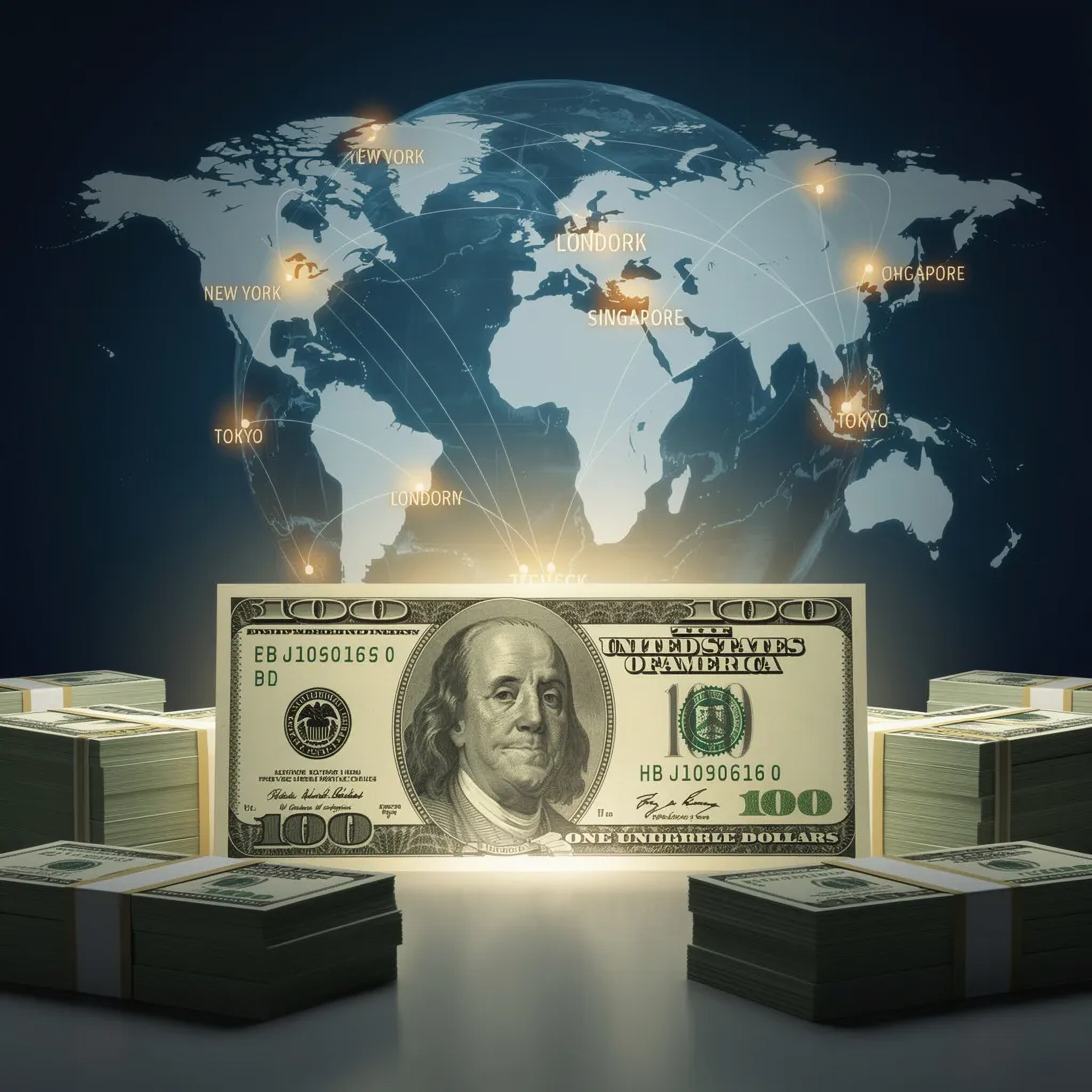
The FX swap market’s hidden dollar obligations represent claims on dollars that may not exist during crisis conditions. The Fed’s swap lines provide backstop liquidity, but political pressures could limit their use during future crises. The arrangement also embeds moral hazard, encouraging foreign banks to maintain dollar positions reliant on emergency Fed support.

The ultimate irony is that these shadow funding markets, each exceeding traditional banking in scale, developed precisely because regulations and capital requirements made conventional banking increasingly constrained. Repos allow balance sheet expansion without corresponding capital. FX swaps create dollar funding without dollar deposits. The regulations drove activity into less visible channels while authorities congratulated themselves on banking system safety.
The next crisis will likely reveal new vulnerabilities in these markets that regulators currently fail to appreciate. The mathematical certainty is that systems dependent on continuous short-term funding rollover eventually face conditions where that funding disappears during geopolitical crises. The question is not whether but when, and whether authorities respond with adequate speed and scale when private markets seize. That appears to be 2027 and beyond.
These are not peripheral financial markets but the central nervous system of global finance. Their continued growth and systemic importance guarantee that future crises will involve repo and FX swap market disruptions. Understanding the distinction between these markets and their respective fragilities matters enormously for anyone hoping to anticipate where the next financial earthquake originates. History suggests that understanding will come too late, after crisis reveals what calm periods obscured.

