Flying anxiety rarely starts at the airport. For most travelers, it begins much earlier – the night before a flight – when your mind starts racing through everything that could go wrong. Did I forget something? What if I oversleep? Where is my passport? That low-level tension often has little to do with flying itself and everything to do with uncertainty.
The truth is simple: the calmer your night before departure, the calmer your entire travel day will be. A rushed morning, forgotten items, or missing documents can turn even a short flight into a stressful experience. On the other hand, a well-prepared evening creates a sense of control – and control is one of the most effective antidotes to travel anxiety.
This guide focuses specifically on what to do the night before your flight to reduce stress, avoid common travel mistakes, and start your journey feeling grounded rather than frantic. It’s not about perfection or overplanning; it’s about removing friction before it appears, and it is based on years of practice (my husband traveled weekly for his job, sometimes 2 countries in one week!) These habits come from real-world travel experience, not theory – and they work just as well for frequent flyers as for occasional travelers.
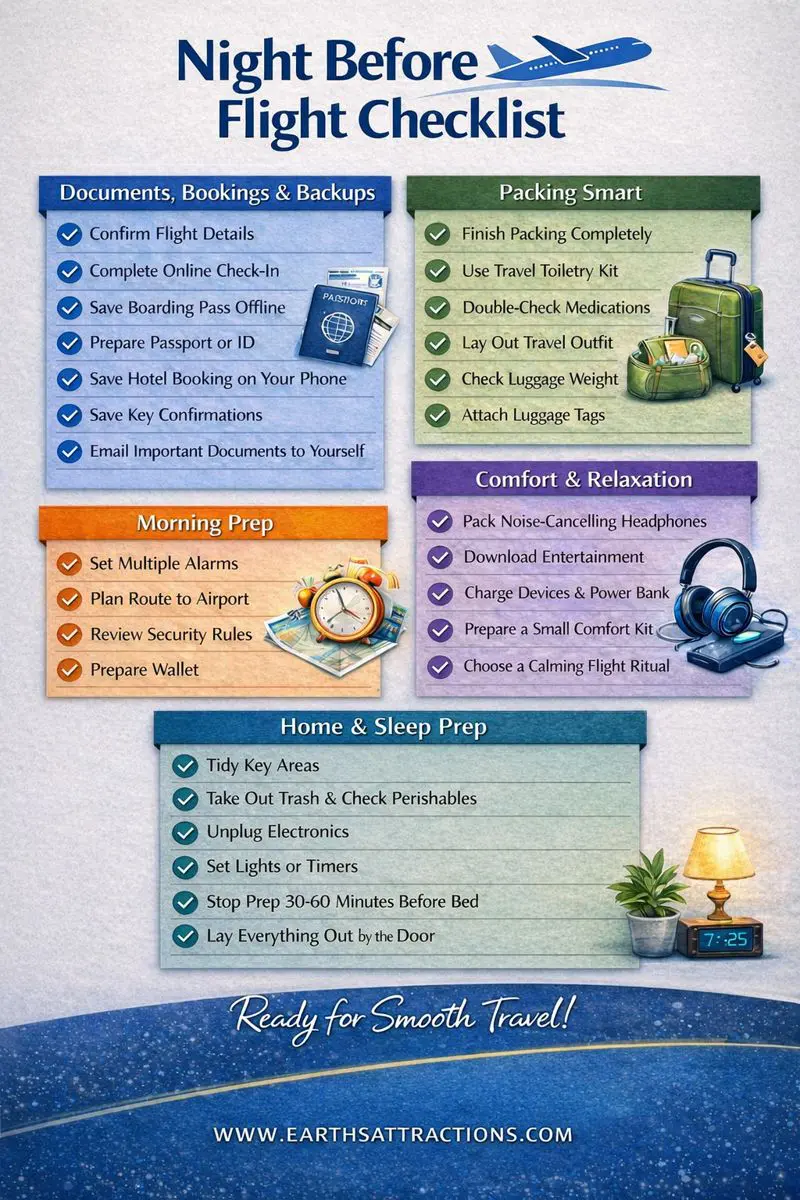
Whether you’re a nervous flyer, an early-morning departure survivor, or simply someone who wants smoother travel days, these 28 practical steps will help you sleep better, move with confidence, and fly without unnecessary anxiety. If you’ve ever searched for a night before a flight checklist or wondered how to prepare for a flight the night before without feeling overwhelmed, this routine is designed exactly for that.
I am all for being efficient and prepared (obviously, I had my share of rushed mornings :D), but now I manage to pack my suitcase in 30 minutes (or even less).
Documents, Bookings & Digital Backups
1. Confirm your flight details
Check your flight number, departure time, and terminal one last time. Even small schedule changes can affect airport arrival timing.
2. Complete online check-in
Online check-in saves time, reduces uncertainty, and often allows you to choose or confirm your seat. It is one of the easiest ways to reduce airport stress.
3. Save your boarding pass offline
Screenshot your boarding pass and keep it in your photos. Do not rely solely on airport Wi-Fi or mobile data.
4. Prepare your passport or ID
Place it somewhere obvious and intentional – ideally in the same pocket or pouch you always use for travel documents.
5. Save your hotel booking on your phone
Have your accommodation details available offline or inside the hotel’s app if you’re staying with a chain. Address, check-in time, and reservation number should be easy to access, especially if you arrive tired or late.
6. Save key confirmations offline
This includes:
- Hotel bookings
- Airport transfers
- Car rentals
A screenshot can be enough when Wi-Fi fails.
7. Email important documents to yourself
It’s a simple redundancy that can save you in case your phone battery dies or files disappear.
Check visa or entry requirements (if applicable)
If you’re flying internationally, confirm entry requirements one last time – visa rules, passport validity, or transit restrictions. This is especially important if you’re transiting through another country.
I included this not as a numbered item on this list, but as a side recommendation because the visa part should have been sorted out in advance (though there are some countries where you can arrange the documents upon arriving).
Packing Smart (Without Morning Panic)
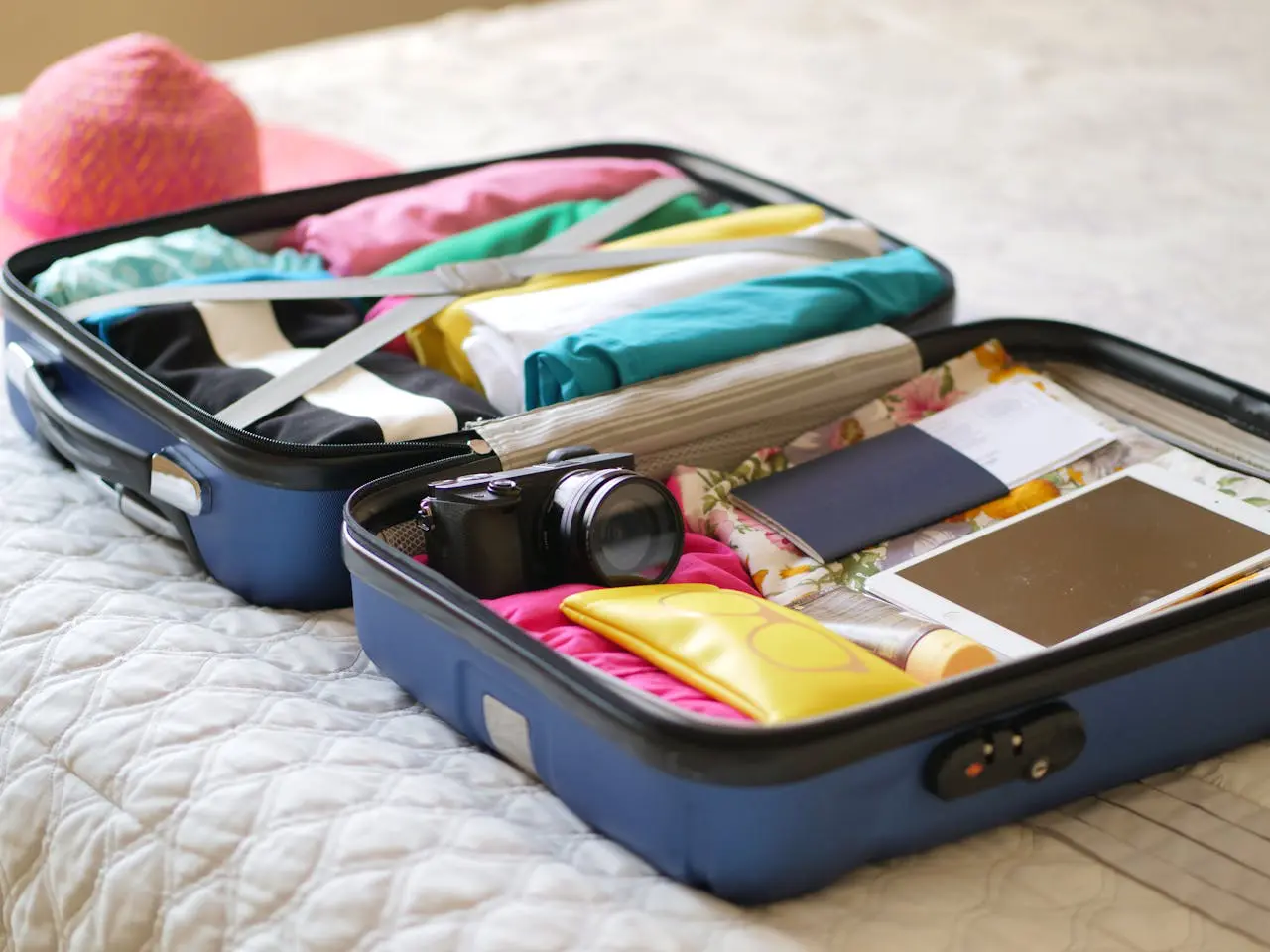
8. Finish packing completely
Avoid the “I’ll do it in the morning” trap. Morning decisions create stress and increase the chance of forgetting essentials.
9. Use a dedicated travel toiletry kit
Have a travel-only toothbrush and toothpaste packed the night before. This is one of the most commonly forgotten travel items and an easy mistake to avoid with a separate kit.
10. Double-check medications and essentials
Make sure all medications are in your carry-on and sufficient for potential delays.
11. Lay out your travel outfit
Choose comfortable, layered clothing and easy-to-remove shoes. This small step reduces decision fatigue early in the morning.
12. Check luggage weight if applicable
Especially important if you’re flying with budget airlines or close to baggage limits.
13. Attach luggage tags and take photos
Quick photos of your bags can help if luggage is delayed or misplaced.
Comfort, Calm & Sensory Control
14. Pack noise-cancelling headphones or earplugs
Reducing noise reduces anxiety. These are essential for nervous flyers and overstimulating airports and for the flight itself.
15. Download offline entertainment
Music, podcasts, audiobooks, or videos. Familiar sounds are grounding and help regulate stress.
16. Charge all devices and power banks
Phones, headphones, watches, tablets – charge everything and pack cables.
17. Prepare a small comfort kit
Include items like lip balm, hand cream, eye drops, or anything that helps you feel normal and relaxed while traveling.
18. Choose a calming flight ritual
This could be a breathing exercise, a specific playlist, or a short meditation. Having a plan reduces anticipatory anxiety.
Morning Logistics (Set Them Up the Night Before)
19. Set multiple alarms
Especially for early flights. Use a second device if possible. If not, then make sure you have 2 alarms set (5-10 minutes apart).
20. Plan your route to the airport
Factor in traffic, construction, weather, or public transport schedules.
21. Review airport security rules
Double-check liquid limits and electronics rules to avoid repacking at security.
22. Prepare your wallet intentionally
Carry only what you need: ID, one or two payment cards, and emergency cash. Less clutter means less stress.
Home Reset Before You Leave
23. Tidy key areas of your home
Focus on spaces that affect your mood:
- Entryway – so you leave calmly, not rushed
- Bedside table – so your last and first moments feel organized
24. Take out the trash and check perishables
This prevents bad odors upon returning and avoids the unpleasant surprise of spoiled food after a long trip.
25. Unplug unnecessary electronics
A simple step for safety and peace of mind.
26. Set lights or timers if needed
Even short trips benefit from this habit, especially if you return late.
Sleep & Mental Closure
27. Stop travel prep at least 30–60 minutes before bed
Signal to your brain that you are done. Late-night planning keeps anxiety active.
28. Go to bed with everything ready by the door
Bag, documents, shoes, jacket – all in one place. Zero morning decisions.
Calm Is Planned, Not Rushed
Flying without anxiety doesn’t mean eliminating every possible problem. It means removing uncertainty before it has a chance to spiral. Most travel stress is created not by the journey itself, but by forgotten details, rushed mornings, and mental overload.
By taking care of these steps the night before your flight, you give yourself something invaluable: mental space. Space to sleep better, move confidently, and start your trip already feeling in control.
Calm travel isn’t about doing more – it’s about doing the right things at the right time.
If you have your own night-before travel habit that keeps you calm, I’d love to hear it.