


This post may contain affiliate links. We may receive a small commission, at no cost to you, if you make a purchase. Read Disclosure.
We all know the scene, it’s Australia’s most sacred and photographed monoliths. Rising out of the red sands, Uluru, also known as Ayres Rock to most, is an ochre-colored beacon that stands as a humbling and hypnotic monument.
Growing up in Australia, we were often told Dreamtime stories of the Anangu people who have a sacred connection to this rock, but it wasn’t until our 18 months road-tripping the country that we were able to gaze upon it ourselves.
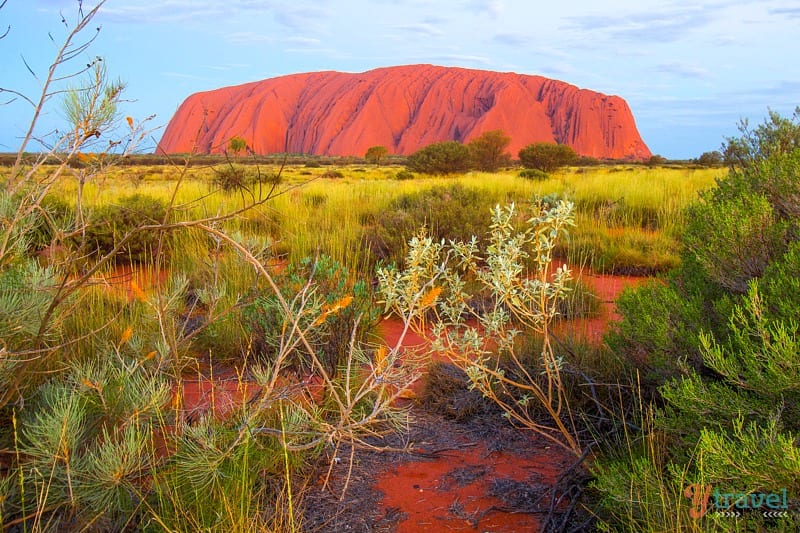
But Uluru is not only about the crimson red rock that’s stamped on the postcards. In the surrounding Uluru-Kata National Park, there are many other monuments, natural formations, canyons, hiking trails, and visual feasts to explore.
If you’re planning on making it out to the Outback and want to see Ayres Rock, make the trip worthwhile by exploring some other things to do in Uluru. From fiery sunsets on camel backs to ancient rock art to stargazing under clear dark skies, Uluru offers a sensory smorgasbord.
How to get to Uluru
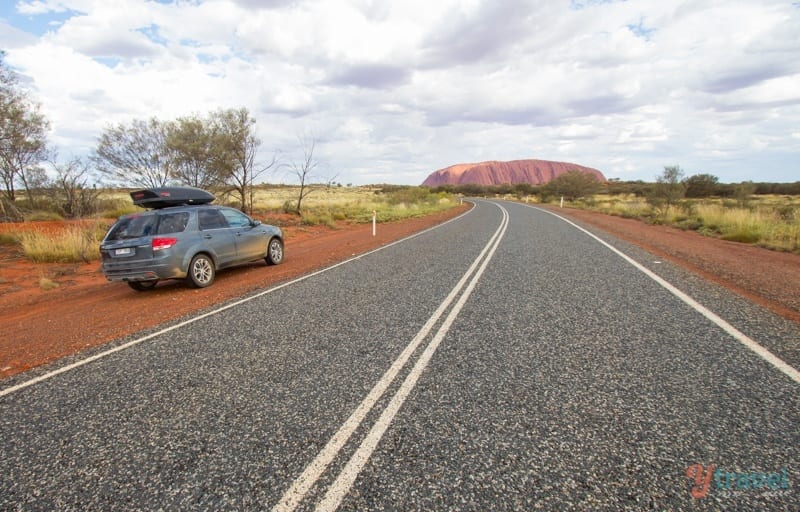
Uluru is not an easy day trip from anywhere. It’s really at the center of Australia in the middle of the desert, aptly named the Red Centre due to the ochre-coloured sand it’s famous for.
The nearest major town you can fly into is Alice Springs, which is at least a four or five hour drive from Uluru. Most major cities have direct flights to Alice Springs, and from there you can pick up a car rental. There are some direct flights from major Australian airports into Ayres Rock Airport in Uluru, but they are usually expensive and not as frequent as they are to Alice Springs.
Another good reason to fly into Alice Springs is for the scenic road trip adventure along the Red Centre Way, which has lots of great attractions and monuments to visit on the way. If you don’t want to drive yourself, you can join one of many organized tours from Alice Springs.
Things to do in Uluru
1. Walk the base of Uluru (Ayres Rock)
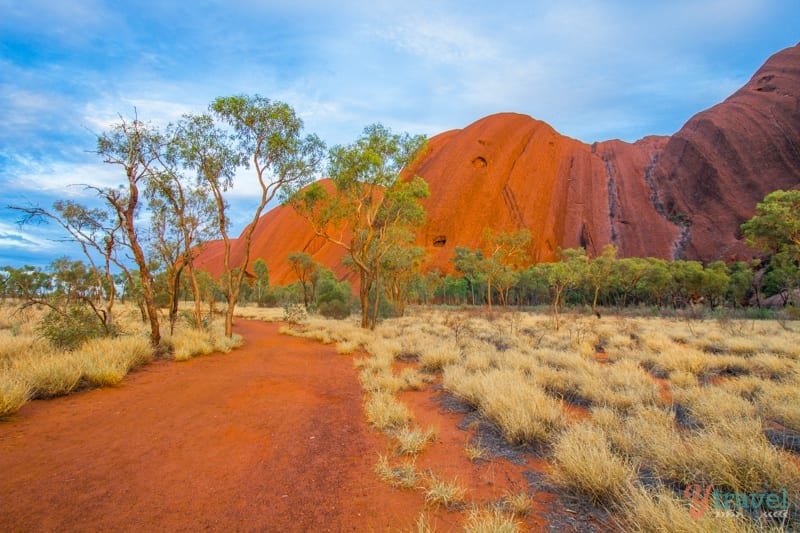
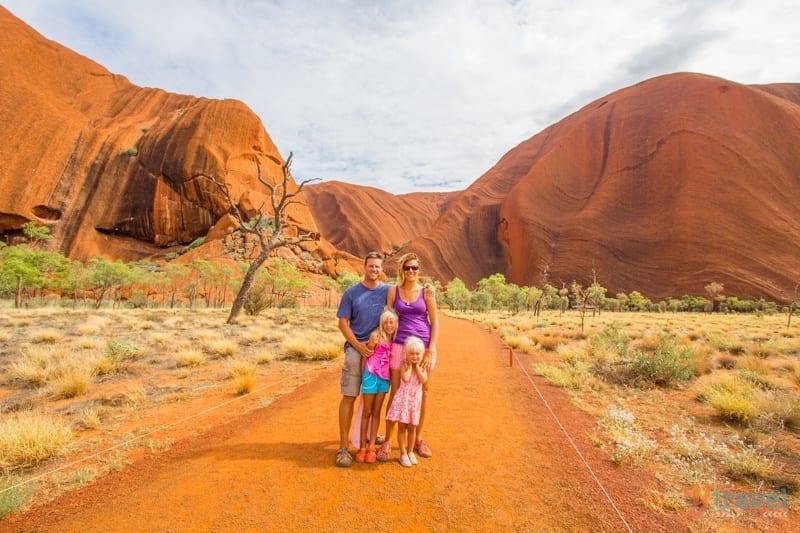
One of the best things we did as a family was walk around the base of Uluru. We’ve done some great walks on our trip around Australia, but nothing quite like the Base Walk at Uluru.
The loop walk is 10.6 kilometres around the whole base of the rock and it took us 3 hours 45 minutes, and that’s with a three and seven-year-old and taking lots of photos.
Remember though you’re in the Outback, so it’s best to start this walk early at first light to beat the heat. The park opens daily at 5am, so as soon as we watched the sunrise we were off. (I highly recommend getting up for sunrise, more on that later).
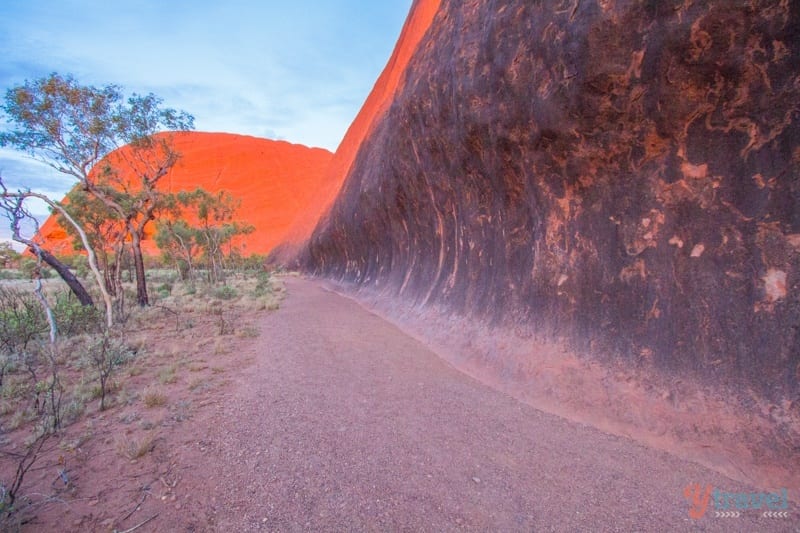
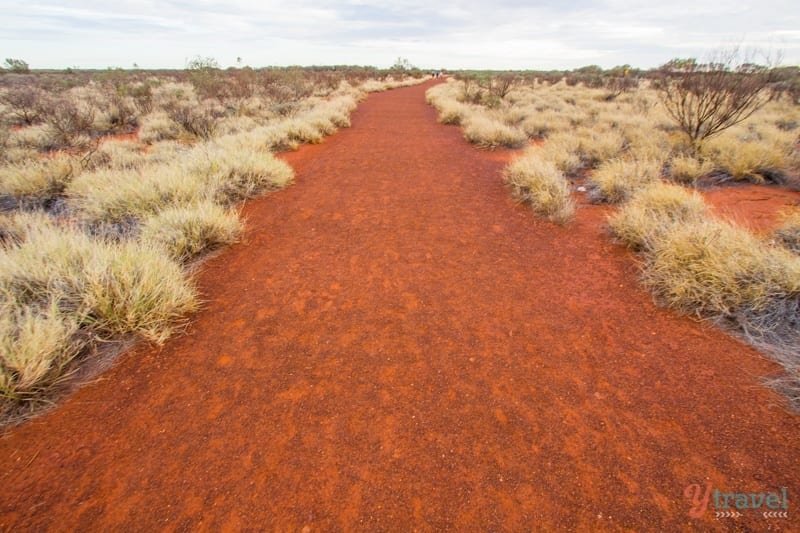
The walk is completely flat with one short sandy section, but otherwise solid footing underneath. We suggest starting at the Kuniya Walking Point and heading anticlockwise. The back face of Uluru doesn’t get any shade so it’s best to walk this section early. In fact, if the temperature forecast is for 40 degrees Celsius they close this walk from 11am.
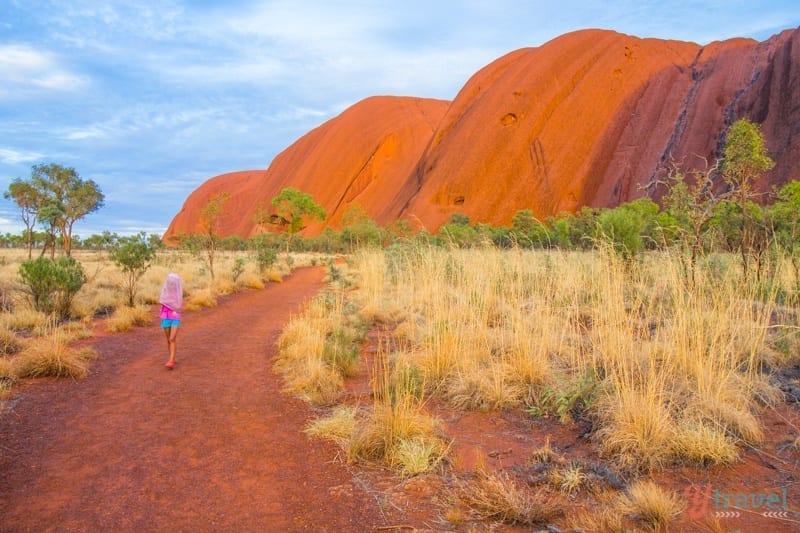
Take lots of water, snacks, and have short breaks. There are a few drinking stations around the loop to fill up your bottle, and don’t forget a wide-brimmed hat, comfortable walking shoes or sandals, and sunscreen. There were quite a lot of flies at the time of our visit, but a head net soon took care of that.
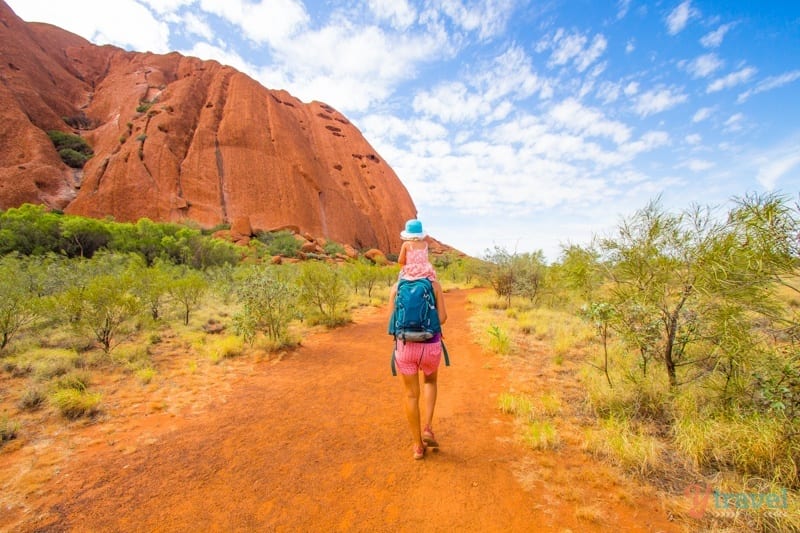
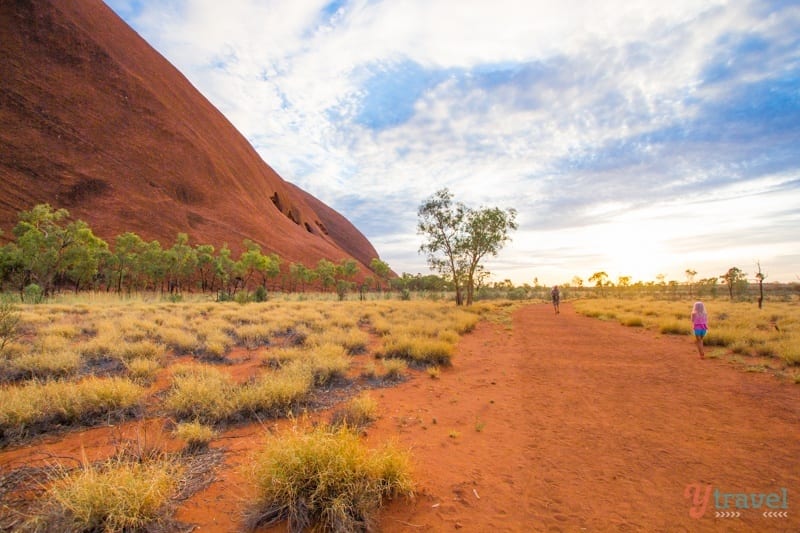
Our kids, aged seven and three, did great. We had to carry little Savannah part of the way sharing the load, but it’s all part of the family adventure. We did the whole loop, and of course took a priceless family pic at the end of the walk:
Note: If you’re wondering about climbing Uluru, as of 2017, it’s no longer legal to climb Uluru…and for good reason. Not only is it an important sacred site, but it’s also an 800-meter steep climb that is actually quite dangerous, people have died, not to mention the high temperatures you get here.
2. Admire the view from a Sand Dune on Lasseter Highway
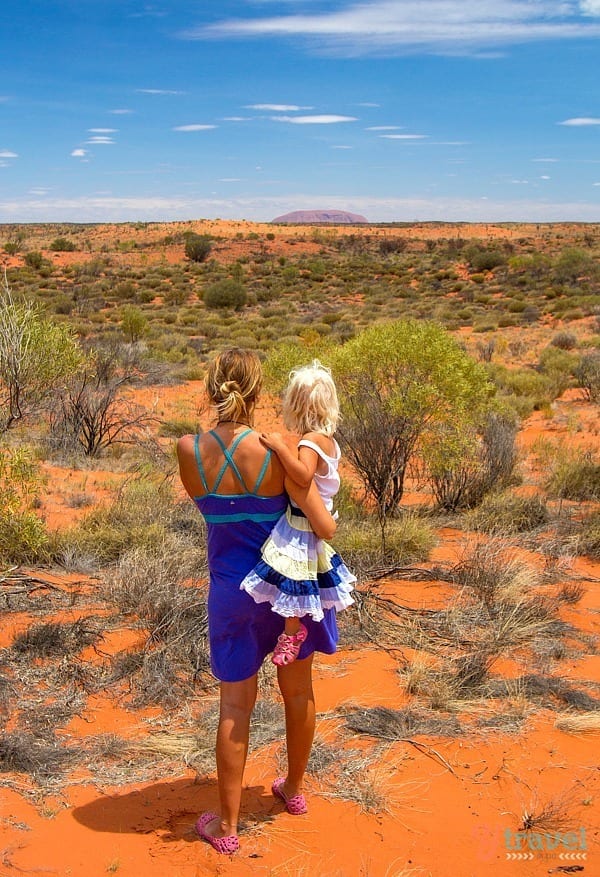
On our way to Uluru, the anticipation to see the famous rock monolith was building as we turned off the main Stuart Highway and headed along Lasseter Highway, and started to see what looked like it in the distance.
As you drive along this road, there’s this campground in a town called Yulara, where you will find lots of pitched tents ready to welcome coach tour guests.
Within the campsite is a viewpoint at the top of a small sand dune, marked on the map as Imalung Lookout. It’s approximately 20 kilometers before you enter the Uluru-Kata Tjuta National Park boundary, you can’t miss it.
Even though you are still quite a distance from THE ROCK, that first sighting is something special and you can feel its presence and what’s yet to come.
3. Watch the sunset at Uluru
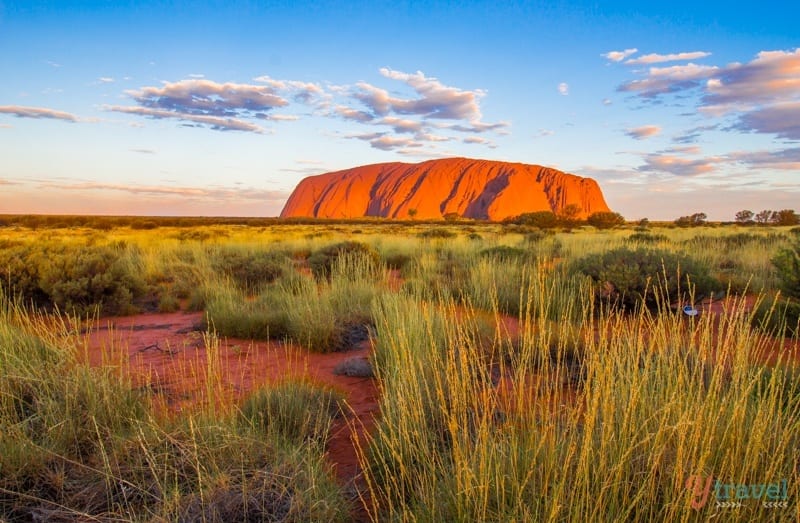
The are several lookout spots for sunrise and sunset at Uluru, especially around the town of Yulara and within the Uluru-Kata Tjuta National Park. Every lookout offers a different perspective of the vibrant and ever-changing colours, but sunset is the time when the red rock surface really shines in its greatest vibrancy.
The most popular sunset viewing area is the official Uluru Sunset Lookout about 10 kilometers down the road through the entrance gates of the park. This is where we had our first up close and personal experience with Uluru, and I’m sure you’ll recognize this profile shot, and like us, you’ll be overwhelmed by its incredible size, presence, and spirituality.
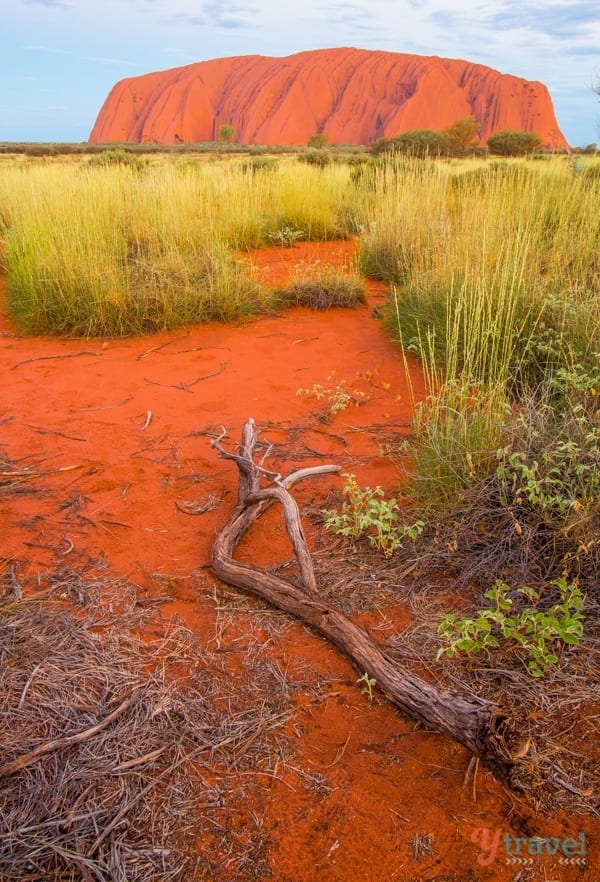
We visited in late February (out of peak season) and sunset was around 7:10pm, and it was still quite busy. I would imagine in peak season the crowds would be massive here, so if you come in peak season, get there early to set up your camp chair and tripod. Bring some nibbles and cold drinks, and enjoy the magical transformation as the sun sinks below the desert horizon.
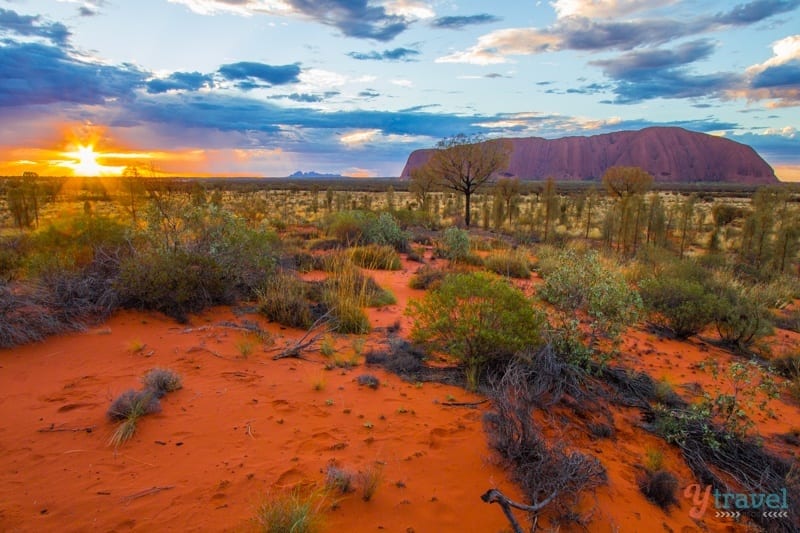
The other option to watch the sunset, and arguably less crowded than the official viewing area, is the Talinguru Nyakunytjaku viewing area. This is more of a sunrise spot, because it’s on the East side of the rock, but sunrise is a totally different story as you’ll read down below.
There’s a tiered viewing platform here that offers uninterrupted views of Uluru and you’ll see the sun in the distance with views of Kata Tjuta 50 kilometers away.
Take your Uluru experience up a level with an Uluru and Kata Tjuta Sunset Helicopter Tour
4. Catch Uluru for sunrise
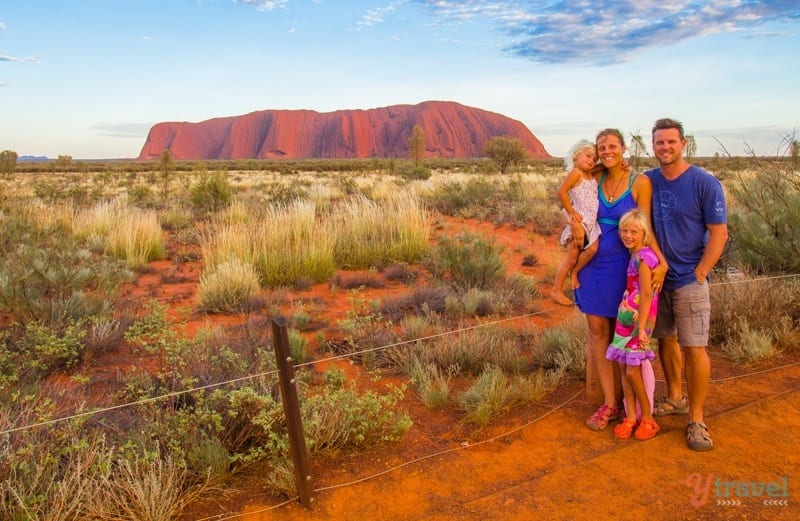
If you’re wondering if it’s worth it to drag the kids out of bed at 5:00am and jump in the car for the 20-minute drive from Yulara into the park, then let the these photos of our uninterrupted and serene views be your answer.
When we visited, sunrise was around 6.20am, and it was the best time of day at Uluru because it was calm and peaceful. If you visit in the summer like us, it’s also the time to beat the heat.
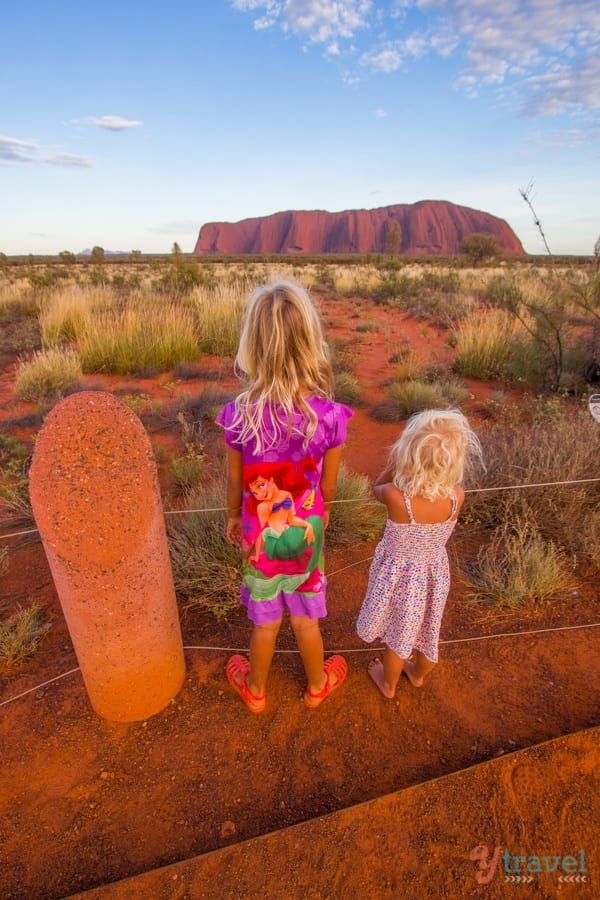
Regardless of what time of year you visit Uluru, seeing the desert and the rock come alive is an unmissable moment. For our first Uluru sunrise, we headed back to the Talinguru Nyakunytjaku sunrise viewpoint mentioned above. Be warned, this is where hordes of people and tour buses converge for sunrise. It was very busy even in the off-season. Again, get here early unless you like people in the foreground of your photos.
To escape the bulk of the crowd and for a closer sunrise view of Uluru, walk down to the track a little in front of the viewing platform, set up your tripod and self-timer, and snap a priceless family portrait.
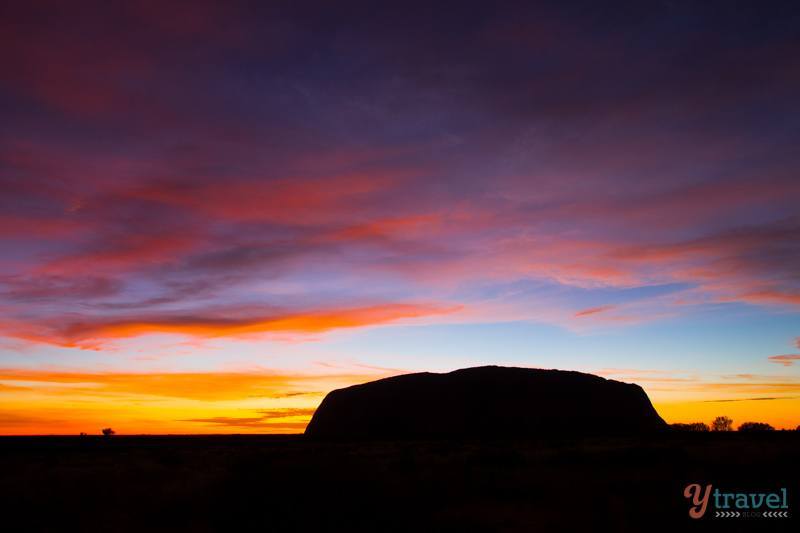
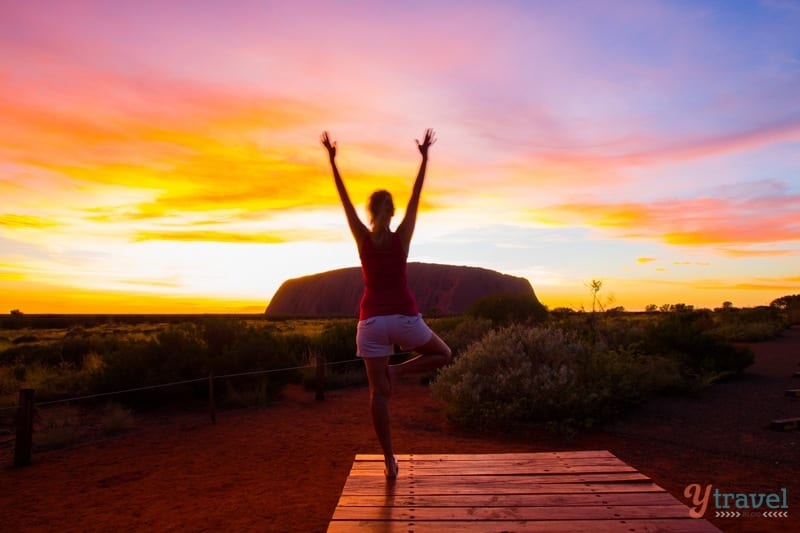
HOT TIP: For a great Uluru sunrise silhouette, on another morning head back to the sunset lookout spot and you’ll get the rock blocking the sun as she rises. Whilst almost everyone headed to the Talinguru Nyakunytjaku lookout for sunrise, we had this sunset spot all to ourselves, and this magnificent silhouette! Caz even took a moment for a morning yoga session.
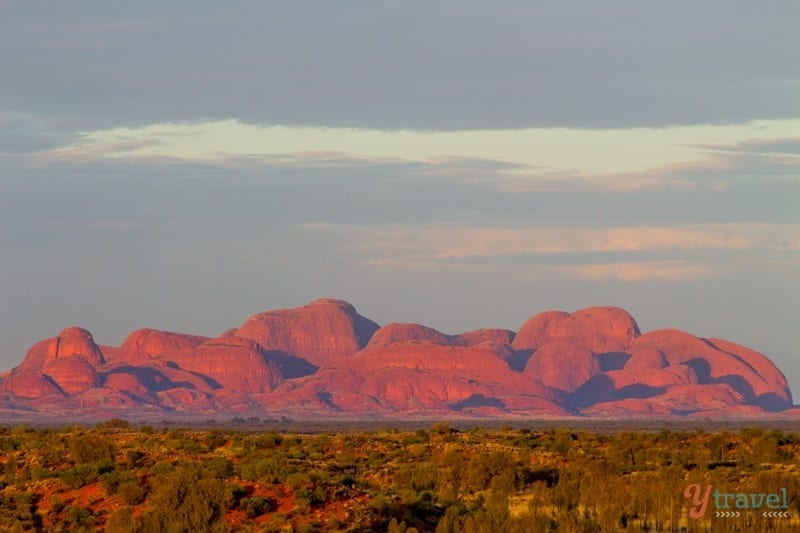
Outside of the park and in the town of Yulara, another good Uluru sunrise option is the Ewing Lookout near the camel farm. You’re much further away from Uluru, but if you don’t feel like getting up as early to drive into the park it makes for a nice option, also with distant views of Kata Tjuta.
I used my 300mm canon lens to zoom in and get this amazing view of Kata Tjuta from the Ewing Lookout:
For another brilliant sunrise silhouette of Uluru head to the Kata Tjuta dune viewing area. We were pleasantly surprised when we drove the 50 kilometers out from Yulara to watch the sunrise over Kata Tjuta, and then looked back and saw this.
Again I used my 300mm lens and tripod, but even to the naked eye, this perspective turned out to be one of my favourite spots in the whole park!

5. Cycle the base of Uluru
If you’re not up to walking the 10.6 kilometers around the base of Uluru, a great alternative is to hire bikes from Outback Cycling, or bring your own and bike it – which is much cheaper. You can even do Uluru segway tours of the base which sound exciting!

We had a tag-along for Kalyra who enjoyed the relaxation of letting daddy do most of the peddling, and little Savannah took in the sights in a baby seat on the back of Caz’s bike.
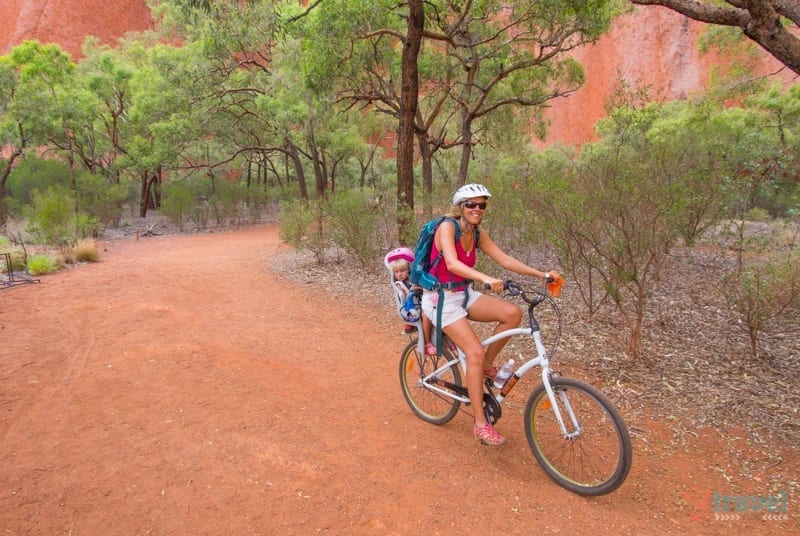
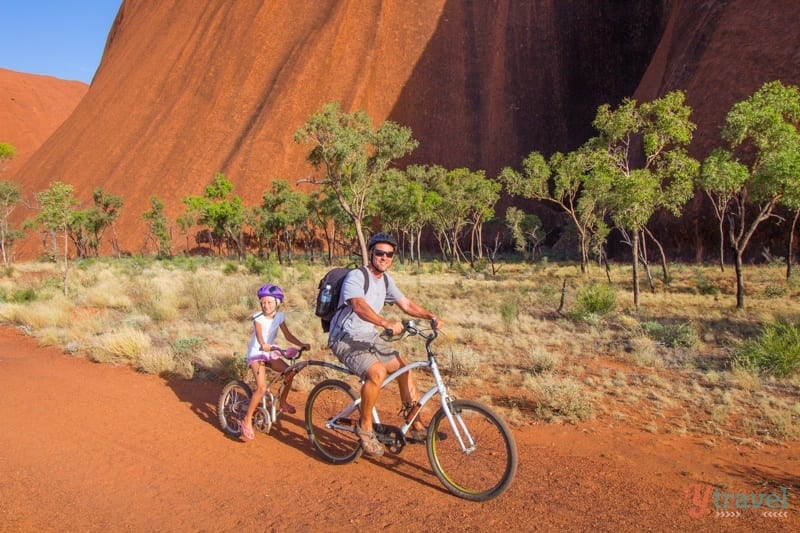
The 15-kilometer track took us about two hours, again stopping for more photos and drink breaks, and it was a thoroughly enjoyable family experience, not to mention another much-needed workout.
7. Take a free ranger guided walk on the Mala walk
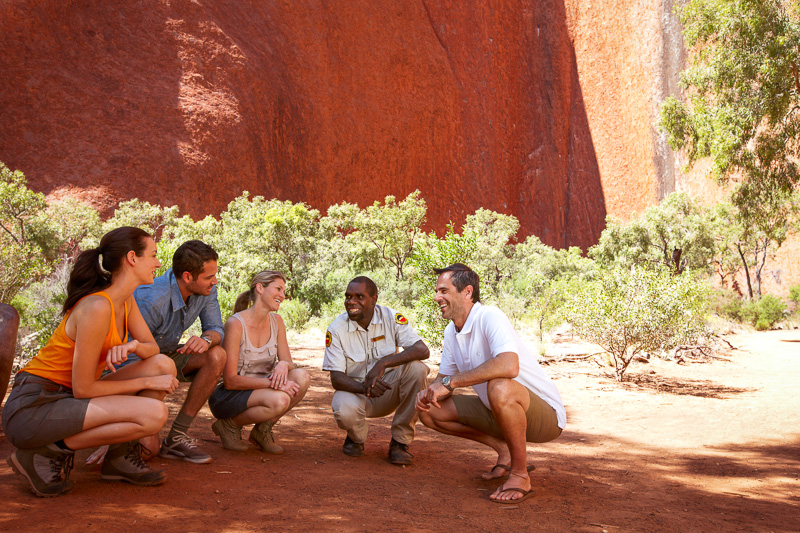
If you don’t want to walk or bike the whole 10.6 kilometers of Uluru, then you can simply walk a section of it on a two-kilometer return walk (1.5 hours) free ranger-guided Mala walk.
A ranger will take you along the Mala Walk, which takes you to base of the rock, to Mutitjulu Waterhole, and Kantju Gorge, stopping to tell the story of the mala (rufous hare-wallaby) people. Learn about traditional Anangu culture, the traditional owners of Uluru, hear creation stories, see rock art, and learn about how the park is managed.
These talks take place at 8.00am from October to April, and 10.00am from May to September, and departs from the Mala carpark. You can even participate in this walk and then head off and complete the entire base walk by yourself.
8. Take an Uluru sunset camel ride
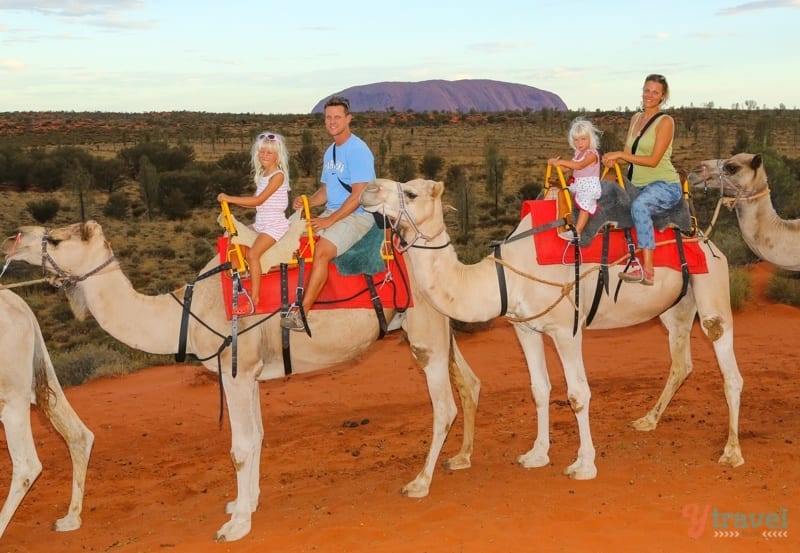
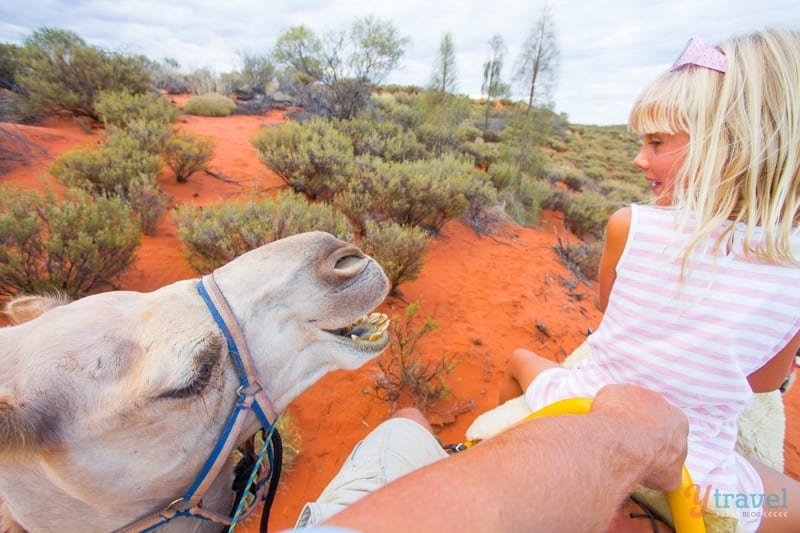
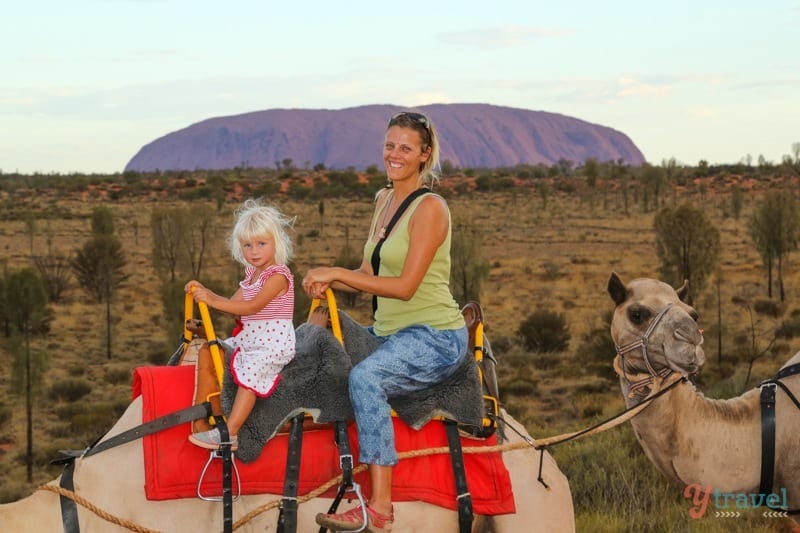
Looking for someone else to carry your load whilst you sit back and marvel at the landscape? Then one of the unique ways to take in Uluru is on the back of a trusty camel. Our kids, and us big kids, absolutely loved this experience.
Little Savannah rode up front like a boss and I shared a camel with Kalyra. Our camel was a bit of a cranky bum to start with but soon fell into line, as they do.
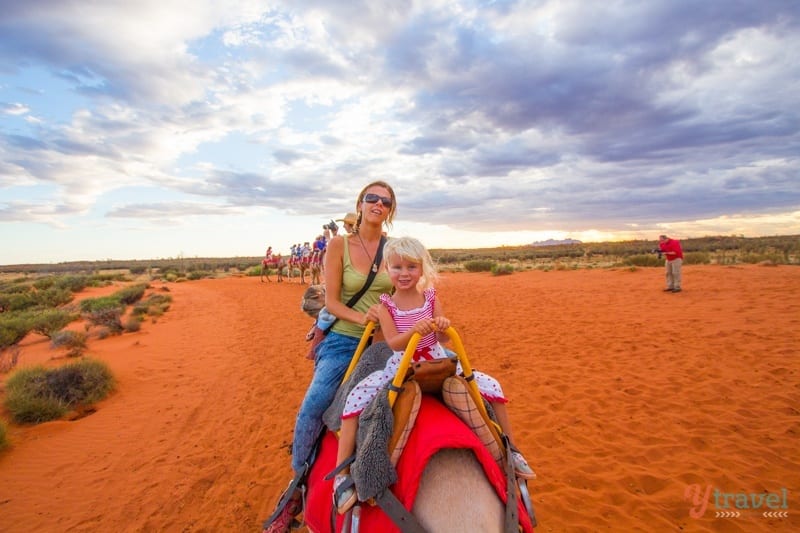
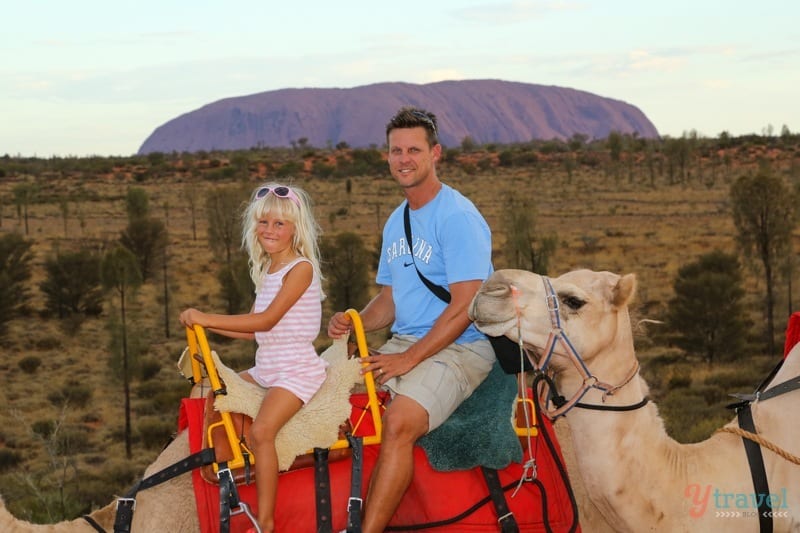
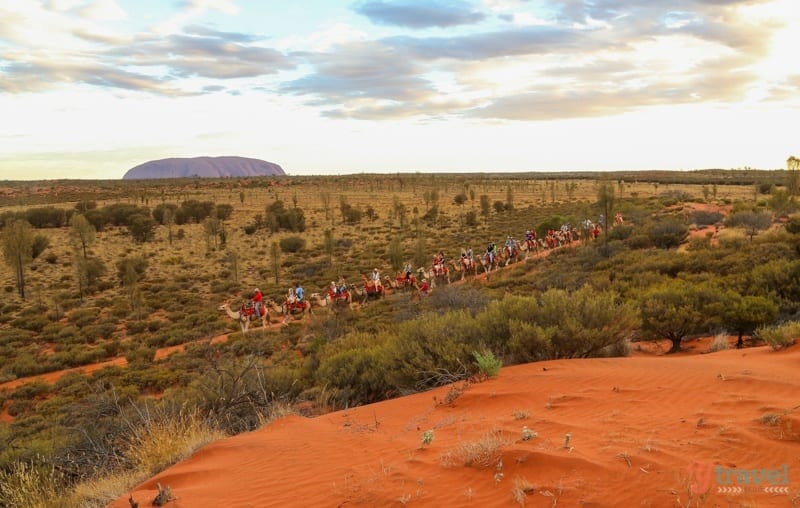
As you can see everyone’s happy to be in Uluru. They’re a funny animal the old camel, always up for a pose and why wouldn’t they be with this as their backyard.
At the end of our one-hour ride again we had amazing views all the way over to Kata Tjuta, and a nice touch was the beer, wine, and nibbles back at the camel farm.
9. Enjoy sunset drinks with AAT Kings
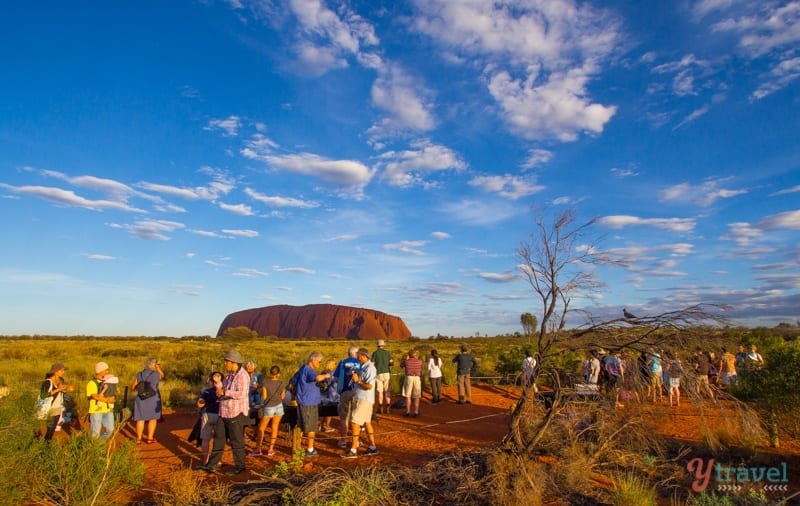
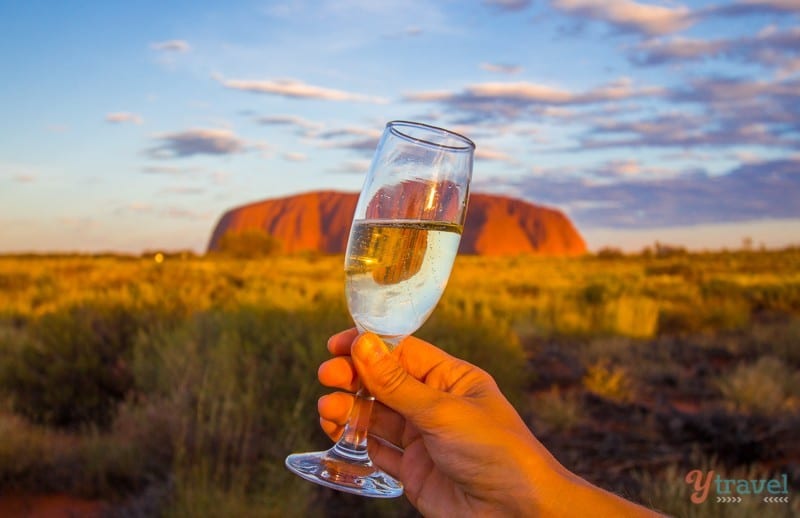
A fitting farewell to our time at Uluru was sipping on a few glasses of champagne with the folks from AAT Kings. By now, we’d spent seven days by ourselves in and around Uluru-Kata Tjuta National Park, and it was nice to mingle with others from around the world and share stories and feelings about what it’s like to take in the wonder of Uluru.
It’s a sight you never get tired of seeing, an experience you never get tired of feeling, and funnily enough, looks and feels even better after a few glasses of the old bubbly!
10. Experience the Sounds of Silence dinner
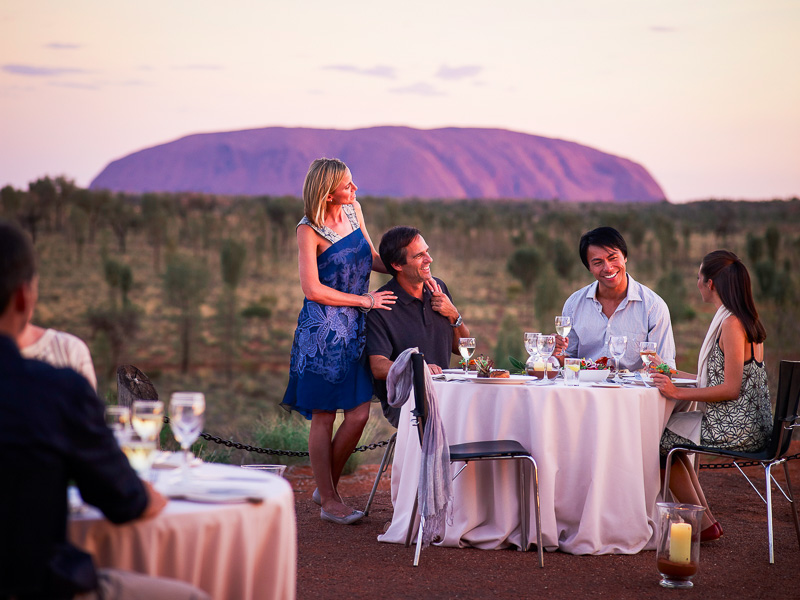
On our bucket list for next time we return is the Sounds of Silence dining experience under the stars (when the kids are a bit older). It’s an evening of dining under the dazzling outback night sky, which is full of stars. You can even see the Milky Way.
The experience offers canapes and chilled sparkling wine, whilst you sit on sand dunes that overlook the Uluru-Kata Tjuta National Park.
The idea is to watch the sunset view and as darkness falls, listen in silence for the sound of a didgeridoo performance and the still outback ambiance. After dinner, listen to an astronomer paint a map of the night sky for you and learn about planets and star constellations.
11. Hike in Walpa Gorge

Nearby the Kata Tjuta area, you’ll find the stunning Walpa Gorge. This scenic landscape is known for being a desert refuge for wildlife, such as wallabies, as well as native plants and fauna. You can see clusters of pink daisies sprinkled across the ground in the winter.
There is a 2.6km out and back hiking trail through the sandstone domes, which passes by a seasonal stream and rare plants. It’s one of the most beautiful natural sites near to Uluru.
12. See the Rock Domes of The Olgas
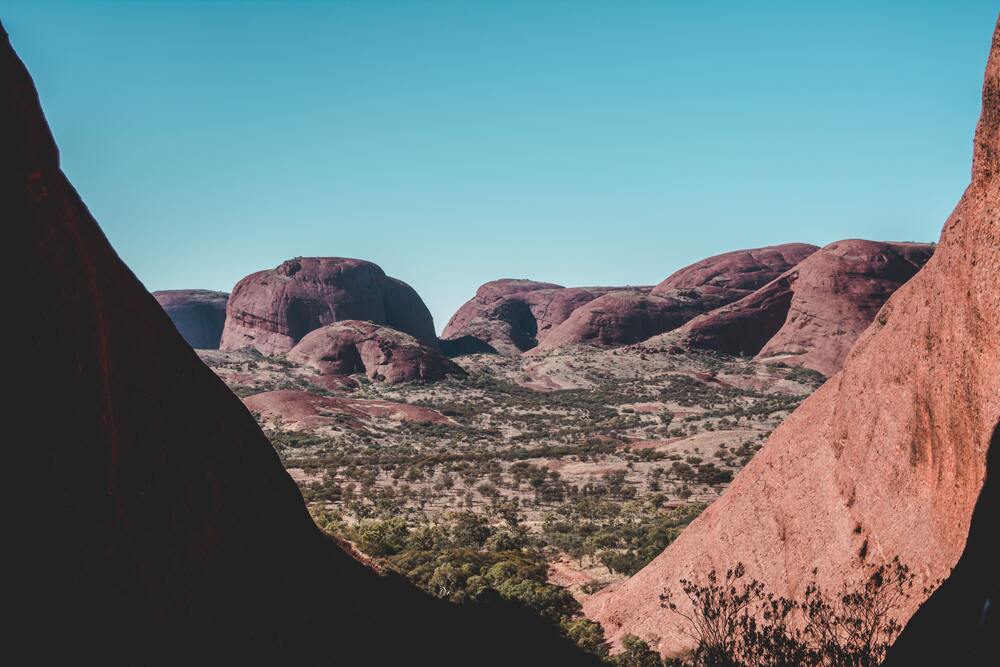
If hiking is your thing, then a visit to the domes of Kata Tjuta, or The Olgas, is definitely worth adding to your list of activities to do in Uluru. The Olgas are a collection of ochre-coloured rock formations that rise out of the Earth in a dome-shape, and they are even known to glisten and change colour during sunrise and sunset.
These unique rock formations are just 40km west of Uluru and is also a sacred site to the Anangu people. In aborigini, the name Kata Tjuta means many heads, and it’s a reference to the number of formations that reside here.
It’s listed as a UNESCO World Heritage Area and praised for both its natural and cultural value. It’s possible to walk around the domes on a 7.4km trail known as the Valley of the Winds trail. The trail is moderate difficulty and takes around 4 hours to complete.
13. Visit the Town of Curtin Springs
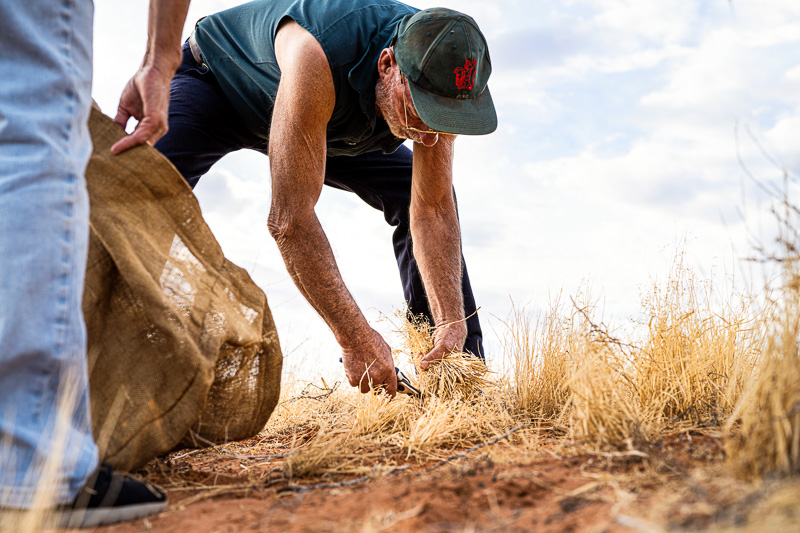
Curtin Springs is a family-owned ranch owned by the Severin family, who have made the arid Outback desert their home. You can visit Curtin Springs and learn about paper-making through workshops and demonstrations using local grass. You can also visit their million acre cattle station, stay at their inn, or enjoy private walks of their land.
14. Check out the Fields of Light Art Installation (Tali Wiru)
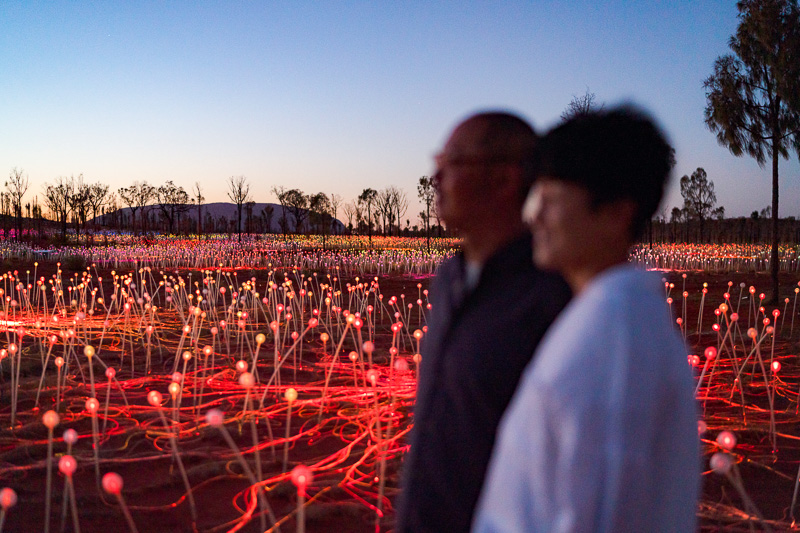
One of Uluru’s top attractions is the Field of Light art installation created by British Artist, Bruce Munro. The installation has 50,000 solar-powered spheres of light that illuminate an area the size of a football pitch. The lights are supposed to resemble stems and looks like a field of glowing flowers.
In the Pitjantjatjara language, it’s known as Tili Wiru Tjuta Nyakutjaku or simply in English; looking at lots of beautiful lights. You can also join a guided sunrise tour to Field of Light with transfers from Yulara included.
What’s so special about Uluru?
Uluru has been a very spiritual place to the local Anangu people, the aboriginal/indigenous people/traditional owners of the area, for thousands of years. Ask most people who visit and spiritual experience is the word they often use to describe it.
Made of arkosic sandstone, Uluru stands 348 meters high and is taller than The Eiffel Tower and 2.5 times the height of Sydney Harbour Bridge. It’s a massive monolith and an incredible site to behold, not to mention it’s sacred.
When is the best time to visit Uluru?

Every season offers something different in Uluru, and we believe it’s worth visiting whenever you can make it happen! We visited during the hottest month of the year, and while it was uncomfortable at times, we still had the most amazing time and I would do it again in a heartbeat.
The winter months are typically the most popular time to visit Uluru as the temperatures are much cooler and the flies not as intense. The colours of the rock are more vibrant and you have more chance of seeing abundant waterfalls (yes, it’s amazing how much water you find in the desert).

But, visiting Uluru during the winter months will mean you’ll be dealing with higher crowds and prices. You can look towards more of the shoulder months or April, May, September and October for more ideal conditions.
How many days do you need in Uluru?
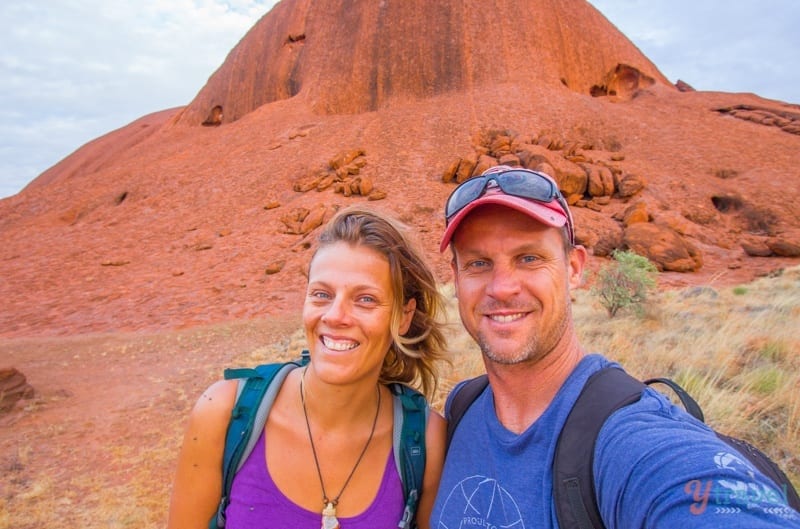
You’ve probably seen hundreds of photos, postcards, and TV commercials of Uluru, and think that it’s a day trip kinda place. But it’s so much more than that. It’s a place you have to see and feel, for yourself. To really get a feel for the place, and to do all the activities around Uluru, you should spend at least 3 days here. This will allow you to explore the area at your own pace and really come away having fulfilled a once in a lifetime experience.
Where to stay in Uluru
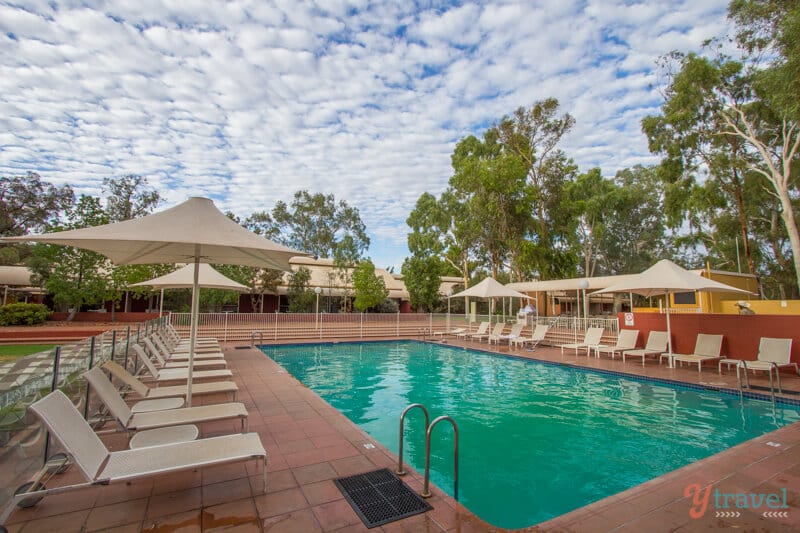
There are so many campgrounds and inns around Uluru, it can be hard to pick a place to stay. We stayed at Ayers Rock Resort in Yulara, which was one of the first resorts to open near Uluru.
It has everything you need from hotel restaurants, cafés, a mini-mart, and the only petrol station. The accommodation options range in budget. You can get an unpowered camping site for an affordable price tag or fork out for the Longitude 131º Luxury Pavilions which is the most luxurious option. In the busy periods, expect to pay more as this is one of the most desirable places to stay.
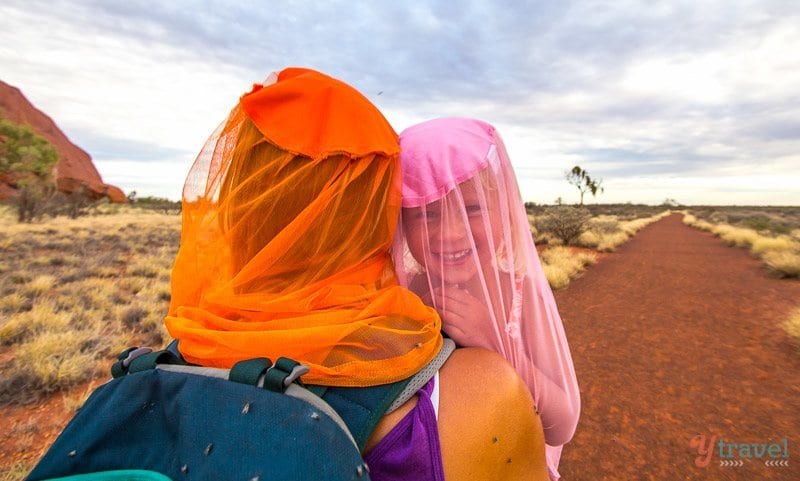
We experienced camping at an unpowered site, which was killer during the hot summer months. We had 43º C – 45º C temperatures every day, which made sleeping very difficult, as did the crazy flies!!
Thankfully, camping at Yulara gives you access to the Ayers Rock amenities so during the heat of the day we could swim in the pool or sit inside the foyer in the AC.
We also had two nights in an Emu Walk Apartment, which was total bliss! We had loads of room and plenty of cool temperatures with the aircon. I highly recommend it if you are visiting during the summer months or visiting Uluru on a short term holiday rather than as part of your long term caravanning trip around Australia!
You can browse more options for accommodation in Yulara in this map:
Final thoughts
Uluru is one of the most iconic landmarks in the country and one of the main reasons to visit this dry and arid landscape. For many visitors to Australia, Uluru is at the top of their Aussie bucket list, and it’s easy to see why. Uluru is not just about the red rock formation, it’s actually part of the wider Uluru-Kata Tjuta National Park, and there are many things to do in Uluru that you may not know about.
After spending a week in Uluru and getting to know the lands, I now know why this area is known as the heart of Australia. We had the most amazing time exploring Uluru. It was everything we imagined and then some. No, we didn’t do every experience on offer at Uluru, and it still amazes me how much there really is to do around the National Park and Yulara.
You can be sure it won’t be another 40 years until we return. Don’t just come for a day, stay a while and really get to know what I now know to be truly the “heart of Australia”.
Uluru Tours
If you’re not traveling independently, you will love Cosmo’s Classic Australia with Uluru and the Outback (part of the Globus family of brands, who we highly recommend) and this Australian Safari with Globus incorporates Uluru.
See more available tours from Get Your Guide
More Red Center Inspiration
Are you visiting other parts of The Red Centre region? Then you may find these guides helpful:
Pin To Save It On Pinterest
What are you most excited to do in Uluru? Let us know in the comments below!

