



If you’re planning a Greece trip right now and want islands that can comfortably fill a week (or more) without running out of things to do, start with the country’s largest islands by area.
Bigger islands usually mean more flight & ferry options, more choice in beaches and villages, and enough variety to mix lazy days with cultural sights. I’ve personally traveled to Corfu, Kefalonia, and Crete—style big island itineraries where you can experience a different vibe every day—old towns, mountain villages, wineries, and beaches—without constantly packing and moving hotels.
Below are the 10 largest Greek islands, with up-to-date size and population context, and the best quick-hit highlights for planning.
| Rank | Island | Area (km²) | Area (sq mi) | Population | Island group/region |
|---|---|---|---|---|---|
| 1 | Crete | 8,336 | 3,219 | 624,408 (2021) | Crete / South Aegean |
| 2 | Evia (Euboea) | 3,655 | 1,411 | 210,778 | Central Greece (bridge-connected) |
| 3 | Lesbos | 1,633 | 630 | 83,755 | North Aegean (near Turkey) |
| 4 | Rhodes | 1,398 | 541 | 125,000 | Dodecanese |
| 5 | Chios | 842 | 325 | 50,361 | North Aegean |
| 6 | Kefalonia (Cephalonia) | 781 | 302 | 36,064 | Ionian Islands |
| 7 | Corfu | 610.9 | 236 | 101,600 | Ionian Islands |
| 8 | Lemnos | 477.6 | 184 | 16,411 | North Aegean |
| 9 | Samos | 477.4 | 184 | 32,642 | East / North Aegean (near Turkey) |
| 10 | Naxos | 430 | 166 | 20,578 | Cyclades |
Greece is a beautiful place to visit in your lifetime. It’s the ideal vacation destination thanks to the weather, cuisine, and welcoming locals.
Even though Greece is so large, it can take time to decide exactly where to go, especially when it comes to the most remarkable Greek islands to visit. Greece is home to various island groups, most of which are located in the Aegean, Ionian, or Saronic Gulf.
We have gathered a goldmine of information on the biggest Greek islands. So, let’s dive in!
Skip Ahead To My Advice Here!
10 Largest Greek Islands by Area (With 2026 Facts)
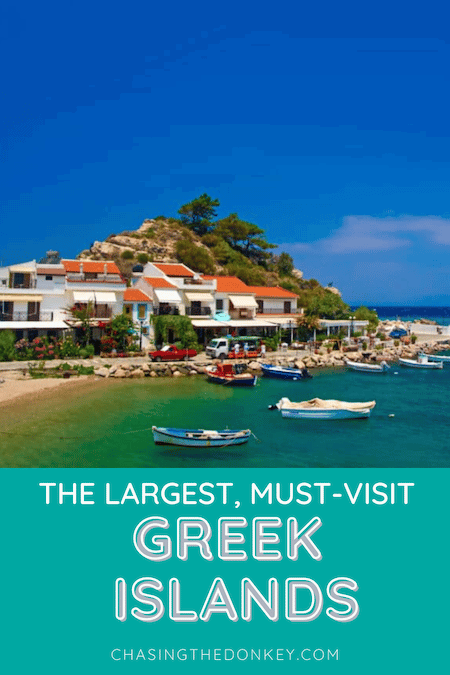
The biggest islands in Greece (by area) are ideal for an epic getaway.
1. Crete – The Largest Island In Greece
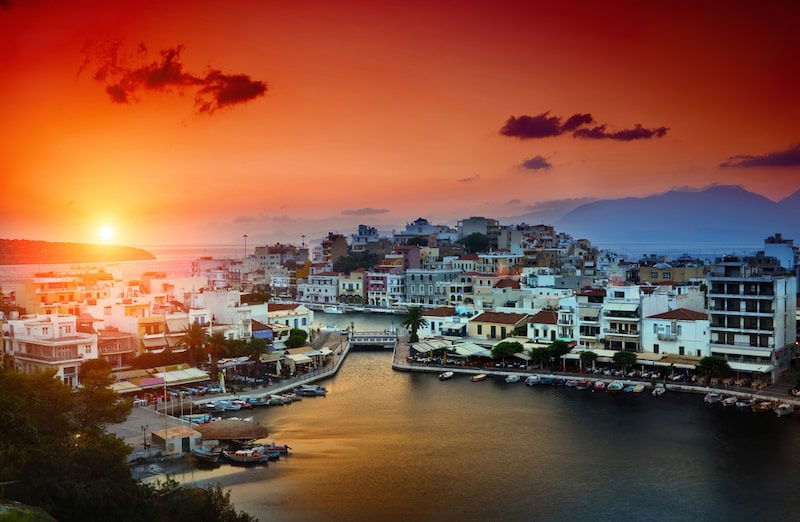
Size: 3,219 square miles – 8,336 km2 – Population: 624,408 (2021)
Crete is the largest island in Greece and has its own unique culture. It epitomizes ancient ruins, bustling cities, and stunning beaches. Although many visitors come for the sun, sea, and sand, the best things to do in Crete go far beyond the standard vacation package.
From palm-fringed beauty to the shadow of the White Mountains, it is a magnet for culture enthusiasts and fun seekers. The activities here range from some of the best trekking in Europe to top-notch museums, just like the surroundings.
Things to do:
- See the palace of Knossos
- Hike the Samaria Gorge
- Visit Matala Beach and its sea caves
- Evia (Euboea)
2. Evia (Euboea) – Second Largest Island Of Greece
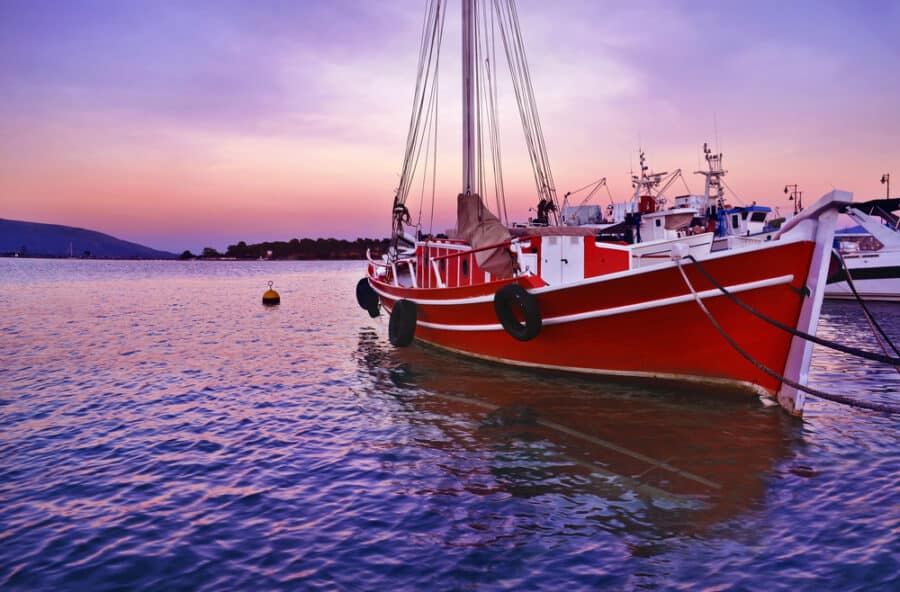
Size: 1,417 square miles – 3,655 km2 – Population: 210,778 (Euboea regional unit, 2021)
Evia, the second-largest after Crete, is a jumping-off point for smaller, more overtly enchanting neighboring islands. But as you discover, it unveils beautiful mountain roads, worthwhile hikes, flowing vineyards, significant archaeological discoveries, and a ton of empty beaches, all of which make it a popular getaway for Athenians and people from other parts of the mainland.
The island has mild-to-cool, wetter winters and hot, dry summers, with the warmest beach weather typically from June to September. Check out a detailed guide to the second-largest island of Greece.
Things to do:
- Explore Karababa Castle
- Discover Drimona Waterfall
- Visit Drakospita (Dragon Houses)
3. Lesbos – Big In Size & A Rich History
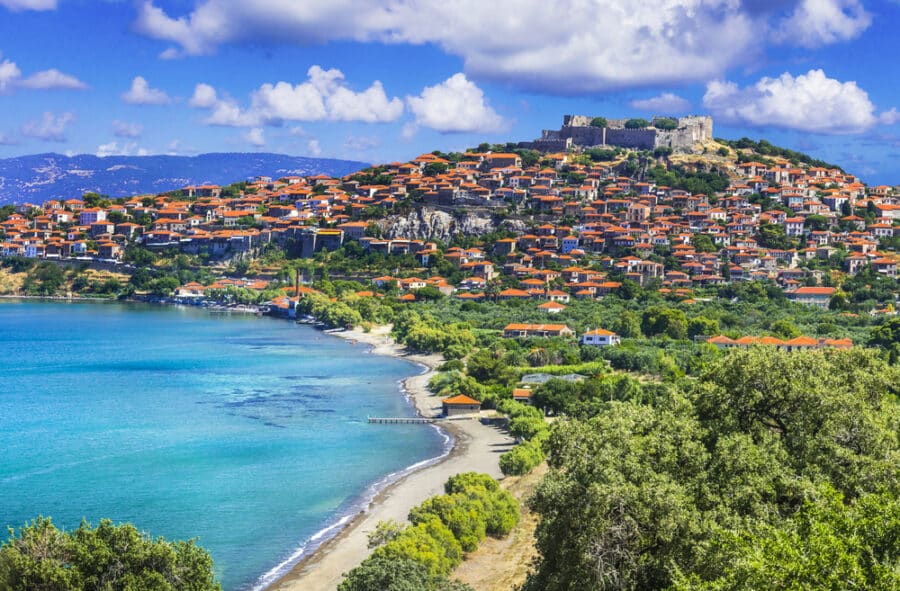
Size: 630 square miles – 1,633 km2 – Population: 83,755 (2021)
Lesbos is a North Aegean island just 5.5 km (3.4 miles) from the Turkish coast at its closest point. The third-largest Greek island is frequently described as a lovely island with almost 11 million olive trees, ancient castles, monasteries, mosques, a Roman aqueduct, temples, and hot springs.
Because the island has been shaped by Greek, Byzantine, Genoese, and Ottoman rule (and its proximity to Turkey), you’ll see layers of cultural influence in architecture, food, and local traditions. Lesbos is said to be the birthplace of many famous poets. A visit to pristine and family-friendly beaches like Eresos, Vatera, and Anaxos is a must.
Things to do:
- Explore the Castle of Molyvos
- Drive out to Monasteries
- Visit the Petrified Forest of Lesbos
4. Rhodes – Fourth Largest Greek Island

Size: 541 Square miles – 1,398 km2 – Population: about 125,000
Rhodes is one of Greece’s most popular islands, known for its medieval Old Town and long, layered history. The Dodecanese archipelago’s island is famous for the Colossus of Rhodes. Due to its many stunning beaches, it is a great summer vacation destination. The island’s traditional cuisine, stunning natural surroundings, medieval towns, archaeological sites, museums, and other attractions complement each other.
The medieval old town of Rhodes has been designated a World Heritage Site for history buffs. Visitors travel back in time as they traverse its cobbled alleys.
Things to do:
- Discover the ancient Acropolis of Lindos
- Explore the Palace of the Grand Master
- See the historic Rhodes Old Town
Population note: published figures vary depending on whether they refer to the island, the municipality, or the wider regional unit; a commonly cited recent estimate for the island is around 125,000 residents.
5. Chios – Fifth Largest Greek Island
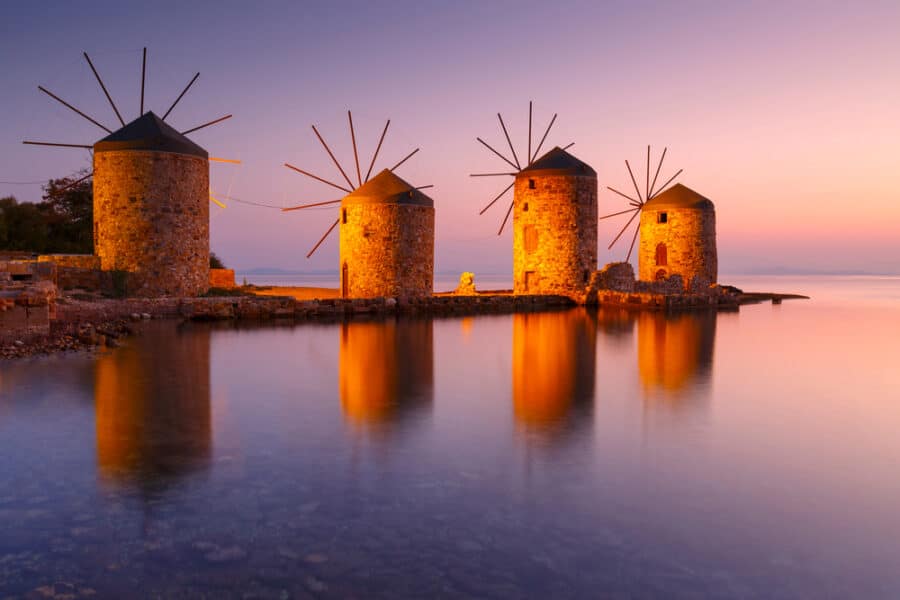
Size: 325 Square miles – 842 km2 – Population: 50,361 (2021)
The fifth-largest Greek island, Chios, is renowned for its fabled mastic trees, ancient towns, a UNESCO-recognized monastery, and a long history that dates back to the Neolithic era, some 8,000 years ago. The ‘fragrant’ island is home to beautiful beaches like the soft sand of Komi Beach and the darkly pebbled Mavros Gialos.
With more than 70 beaches available, choose from an organized or quiet beachfront. Explore the meandering trails of the inland settlements of Pyrgi and Mesta, famous for their distinctive medieval architecture.
Things to do:
6. Kefalonia – On The Ionian Sea
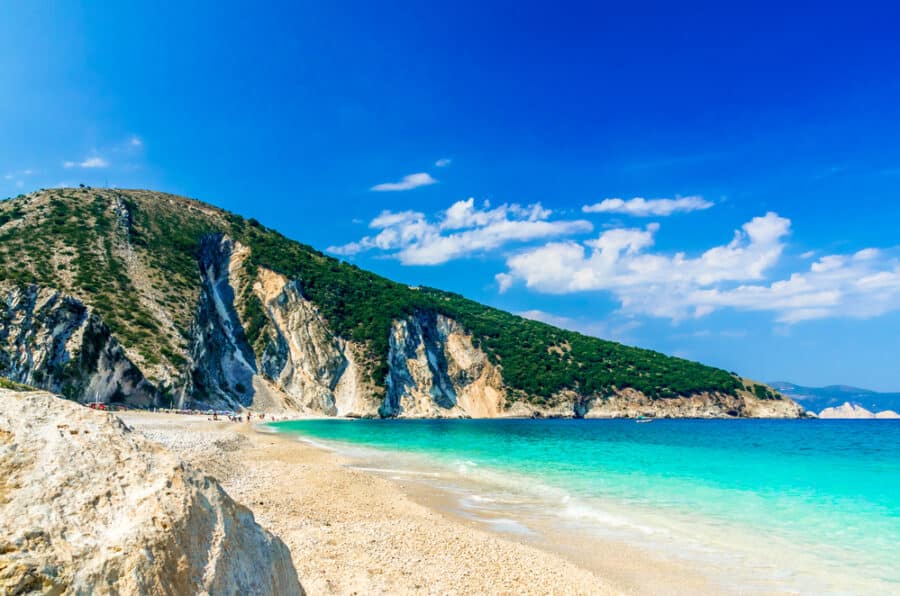
Size: 302 Square miles – 781 km2 – Population: 35,801
This lush island’s stunning beaches and emerald-blue, greenish-blue waters will take your breath away. Kefalonia is indeed a treasure in the Ionian Sea. It has a long history and strong cultural traditions. Being among the largest Ionian Islands, it is incredibly distinctive and a lovely travel destination because the green of its mountains blends with the blue of the water.
The seafloor surrounding the island will undoubtedly satisfy you if you enjoy diving or snorkeling. The rare Caretta Caretta sea turtle and monk seal are found here. Kefalonia is worth a visit and a fantastic, family-friendly island thanks to its rich culinary history, historic villages, lively nightlife, and stunning beaches.
Things to do:
- Explore the Petani Beach
- Discover Melissani Cave
- Visit Makris Gialos Beach
If wildlife is a priority, look for locally run boat tours that follow Greece’s marine-wildlife rules (no feeding or chasing animals) and ask operators what sightings are realistic in the current season.
7. Corfu
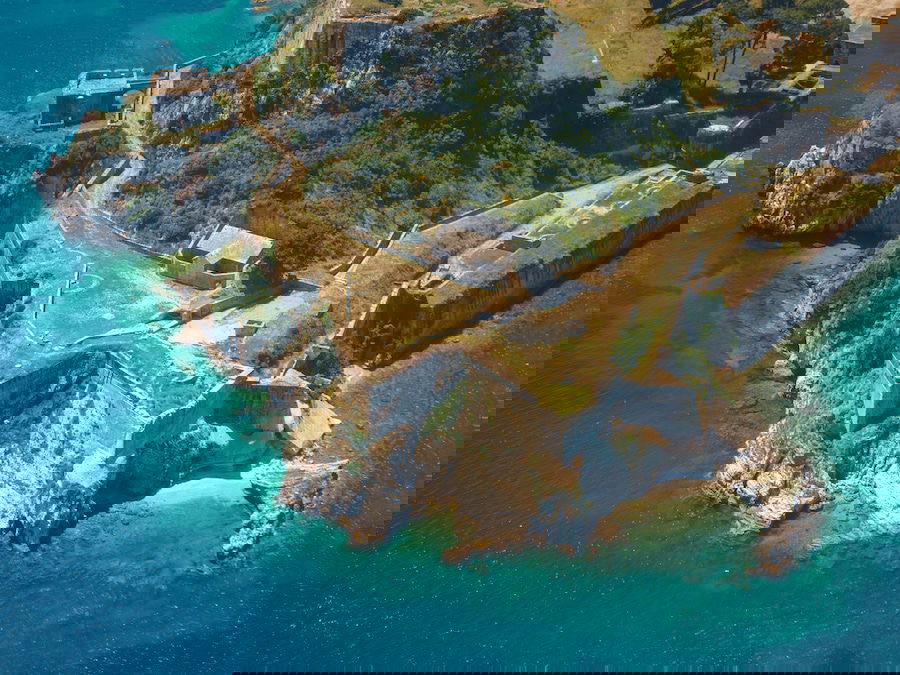
Size: 229 square miles – 593 km2 – Population: 101,600 (2021)
Although the island has changed over the years, you can still sense the spirit of a long-gone golden past. Corfu is one of Greece’s most cosmopolitan islands, known for its multi-cultural heritage, historic landmarks, dramatic scenery, and a Mediterranean climate with hot summers and milder, wetter winters. Unlike the rest of Greece, Corfu was never under Ottoman rule.
Things to do:
- Admire the architecture at Achilleion Palace
- Take a day trip to Paxos Island
- Snorkel in the Blue Lagoon
8. Lemnos
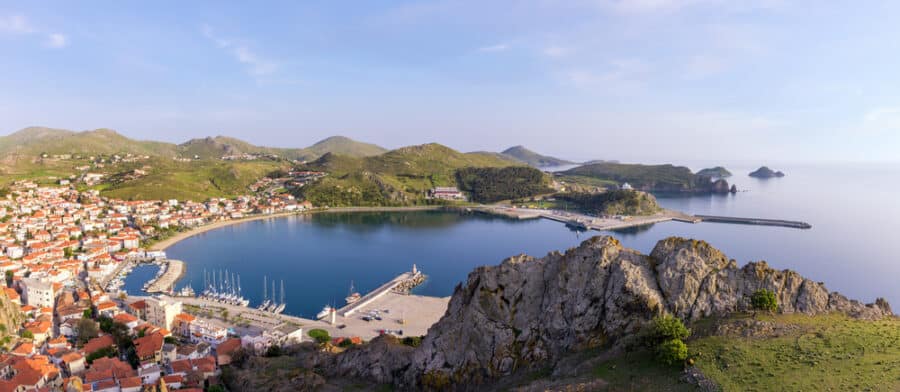
Size: 184 square miles – 476 km2 – Population: 16,411 (2021)
Lemnos is a destination for a leisurely vacation, offering close contact with nature. Long, sandy beaches, protected bays, and landscapes made of volcanic rocks can all be found there. Traditional stone-built villages are scattered among the small plains and hills where durum wheat is grown. The beaches are fantastic and mostly uncrowded.
Things to do:
- Check out the cave of Philoctetes
- Hike to Panagia Kakaviotissa
- Visit the fishing village of Moudros
9. Samos

Size: 184 Square miles – 477 km2 – Population: 32,642 (2021)
Samos boasts a stunning, peaceful environment, lovely beaches, top-notch wine, and significant cultural landmarks. In antiquity, Samos was a powerful and wealthy city-state, famed for its sanctuaries (especially the Heraion) and major engineering works, such as the Tunnel of Eupalinos. Pythagoras, Aristarchus, and Melissus were natives of Samos, and Epicurus was born on Samos.
Take advantage of the enjoyable summertime cultural activities and music festivals; while you’re there, explore Samos Town (Vathy) to learn more about the island’s past.
Things to do:
- Visit the Heraion of Samos
- Explore the Tunnel of Eupalinos
- Discover the beautiful Kokkari
10. Naxos
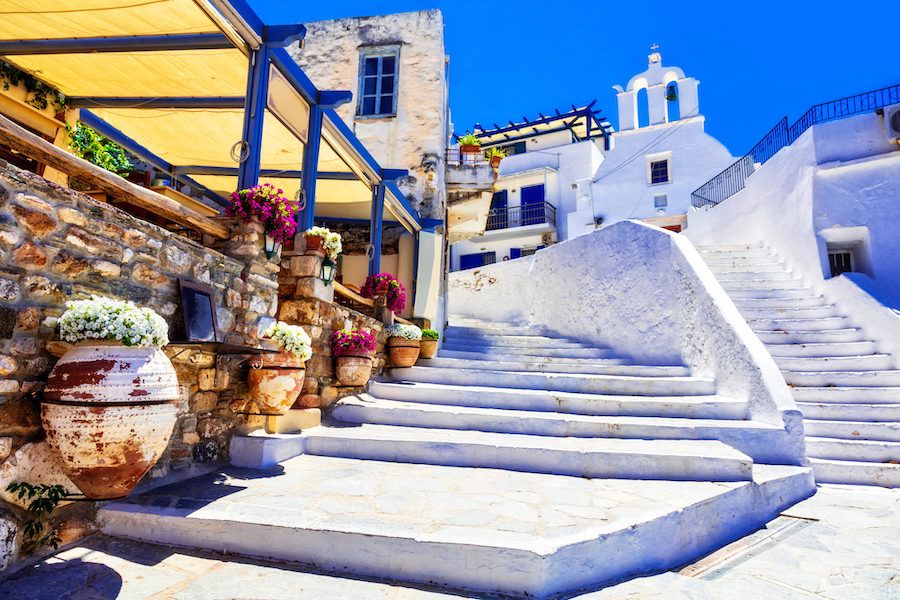
Size: 166 Square miles – 428 km2 – Population: 20,578 (2021)
Naxos is the largest island in the Cyclades group and is renowned for its many beaches and picturesque landscapes. It also has many intriguing historic ruins, not to mention delicious food, much of which is sourced locally. Naxos offers a variety of activities, like scuba diving, windsurfing, cycling to the villages, or simply exploring a secret beach on your own.
If you prefer a less active vacation, there is no better Greek island for unwinding at a stunning spa resort with a cocktail in your hand.
Things to do:
- Swim at the best beaches
- Explore the Castle Kastro
- Wander around Halki village
Brands We Use And Trust

No spam. Unsubscribe at any time.
Frequently Asked Questions
FAQs
What is the largest island in Greece?
Crete is the largest island in Greece by land area (about 8,336 km²). It’s big enough to plan as a standalone trip, with multiple cities, mountain ranges, archaeological sites, and beach regions.
What are the 10 largest Greek islands by area?
The 10 largest Greek islands by area are Crete, Evia (Euboea), Lesbos, Rhodes, Chios, Kefalonia (Cephalonia), Corfu, Lemnos, Samos, and Naxos.
Which big Greek island is best for first-time visitors?
Crete and Rhodes are common first-timer choices because they combine beaches, major historical sights, and strong tourism infrastructure with lots of accommodation and transport options.
Which large Greek island is easiest to reach from Athens?
Evia (Euboea) is the easiest to reach because it’s connected to the mainland by bridges near Chalkida, so that you can get there by car or bus without a ferry.
Which big Greek islands are best for families?
Crete, Rhodes, Corfu, and Naxos are often family favorites thanks to beach variety, plenty of restaurants, and lots of day-trip options that don’t require long drives every day.
Which large Greek islands are best for beaches?
Crete, Rhodes, Naxos, and Kefalonia are strong beach picks, each with very different coastal scenery—from long sandy bays to dramatic coves and clear-water swim spots.
Which big Greek island is best for history and archaeology?
Crete (Minoan sites like Knossos), Rhodes (medieval Old Town and ancient sites), Samos (Heraion and the Tunnel of Eupalinos), and Lesbos (castles, aqueduct, and layered history) are mighty for history-focused trips.
Are the populations listed for the Greek islands always consistent?
No. Population numbers can differ depending on whether the figure refers to the island, a municipality, or a wider regional unit, and whether it’s from a census or an estimate.
Do I need to island-hop, or can I stay on one large island?
You can absolutely stay on one large island. Crete, Rhodes, Corfu, and Naxos can each support a full itinerary without moving bases, which is often easier for short trips.
Final Word On The Biggest Greek Islands
FAQs
What is the largest island in Greece?
Crete is the largest island in Greece by land area (about 8,336 km²). It’s big enough to plan as a standalone trip, with multiple cities, mountain ranges, archaeological sites, and beach regions.
What are the 10 largest Greek islands by area?
The 10 largest Greek islands by area are Crete, Evia (Euboea), Lesbos, Rhodes, Chios, Kefalonia (Cephalonia), Corfu, Lemnos, Samos, and Naxos.
Which big Greek island is best for first-time visitors?
Crete and Rhodes are common first-timer choices because they combine beaches, major historical sights, and strong tourism infrastructure with lots of accommodation and transport options.
Which large Greek island is easiest to reach from Athens?
Evia (Euboea) is the easiest to reach because it’s connected to the mainland by bridges near Chalkida, so that you can get there by car or bus without a ferry.
Which big Greek islands are best for families?
Crete, Rhodes, Corfu, and Naxos are often family favorites thanks to beach variety, plenty of restaurants, and lots of day-trip options that don’t require long drives every day.
Which large Greek islands are best for beaches?
Crete, Rhodes, Naxos, and Kefalonia are strong beach picks, each with very different coastal scenery—from long sandy bays to dramatic coves and clear-water swim spots.
Which big Greek island is best for history and archaeology?
Crete (Minoan sites like Knossos), Rhodes (medieval Old Town and ancient sites), Samos (Heraion and the Tunnel of Eupalinos), and Lesbos (castles, aqueduct, and layered history) are mighty for history-focused trips.
Are the populations listed for the Greek islands always consistent?
No. Population numbers can differ depending on whether the figure refers to the island, a municipality, or a wider regional unit, and whether it’s from a census or an estimate.
Do I need to island-hop, or can I stay on one large island?
You can absolutely stay on one large island. Crete, Rhodes, Corfu, and Naxos can each support a full itinerary without moving bases, which is often easier for short trips.
Ready for an adventure? If so, Greece has top-notch, family-friendly islands for your holiday. Check out our top picks from the largest Greek Islands to make your trip extraordinary.

