


One of the most impressive aspects of Clint Eastwood‘s legacy is the amount of time he’s managed to maintain relevance. Clint Eastwood rose to international fame in the 1960s through his roles in Sergio Leone’s Dollars Trilogy in Italy, and then transitioned to Hollywood where he found continued success in Western movies, albeit American ones from then on.
However, Clint Eastwood was never tied down to any one genre, which allowed his career to survive the decline in popularity of Westerns. Eastwood made a slew of great films across the next 30 years, with it quickly becoming apparent that Eastwood’s film career wasn’t dependent on Western movies.
In fact, it wasn’t even reliant on acting either. Eastwood proved that he was also an adept director, which prompted a gradual reduction in his movie roles during the 1990s and 2000s. But even though he’s making less movies, he’s still contributed something of value to every decade for the vast majority of his time in the industry.
Ambush At Cimarron Pass (1950s)

While looking for his big break in Hollywood, Clint Eastwood made a string of movie appearances in the mid to late 1950s, though most were uncredited or bit parts that added little value to the story. Arguably the only meaningful film role Eastwood played in the 1950s came when he co-starred in Ambush at Cimarron Pass in 1958.
Ambush of Cimarron Pass was a standard, black-and-white B-movie Western where Eastwood plays a Southern cowboy during the Civil War. Make no mistake, it’s not a good film (a notion that Clint Eastwood has since acknowledged), but it was the only major role he was able to secure during this phase in his career.
The Good, The Bad, And The Ugly (1960s)
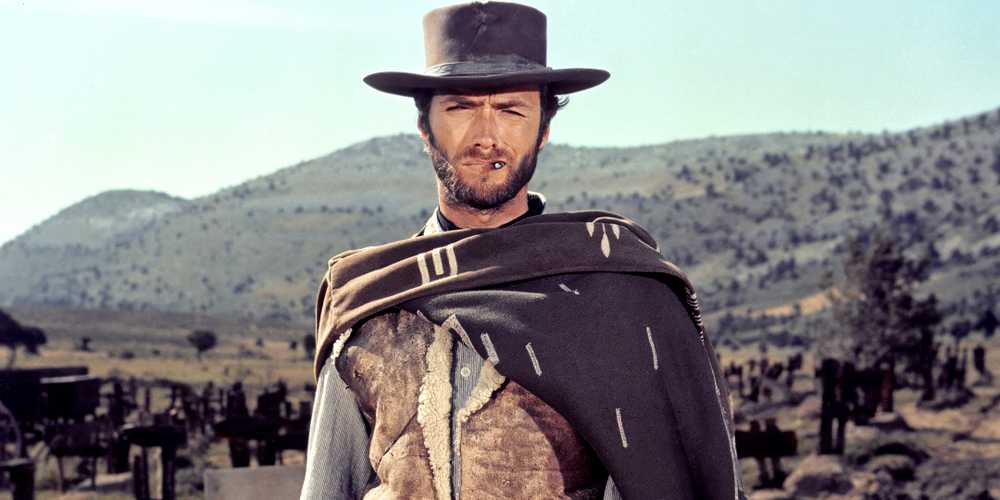
Due to Eastwood getting cast in the Rawhide TV show, Ambush at Cimarron Pass was his last movie role until 1964 when he teamed up with Sergio Leone for Fistful of Dollars, the first installment in their trilogy of Spaghetti Westerns. It was a incredible, beginning-of-an-era Western, which makes it all the more striking that their last film together was actually superior to it.
The Good, the Bad, and The Ugly is not only Clint Eastwood’s best 1960s Western, but it’s in contention for the title of the greatest Western movie of all time.
Featuring three iconic performances from its three lead actors in Eastwood, Lee Van Cleef and Eli Wallach, the film makes the most of its more-than-three-hours of runtime for an epic, gritty, Western adventure topped off by the most intense final shootout the genre has ever seen.
Dirty Harry

After the explosion of fame Eastwood achieved with his The Man With No Name movies in the 1960s, it took less than a decade for Eastwood to find another legendary role, and one that’s shockingly close to the iconic status of his character from Leone’s Spaghetti Westerns. In 1971, Clint Eastwood spawned a movie franchise and created a pop culture favorite when he made Dirty Harry.
The “Dirty Harry” Callahan character in the 1971 police thriller brings out the cruel side of Eastwood’s persona that made him so fun to watch in his Westerns, and amplified it, handing him some unforgettable one-liners and dark moments, including “Do you feel lucky, punk? Well do ya?“
Pale Rider (1980s)

Clint Eastwood made some quality movies in the 1980s, from Heartbreak Ridge to Tightrope, but none stood out more than the film that returned him to his roots as a Western star. In 1985, the actor played a mysterious but deadly priest who turned out to be the community’s only hope against a powerful mining baron.
Playing a priest with a seemingly supernatural element to his place in the movie was a unique way of utilizing Eastwood, but also one that drew upon more familiar facets of his onscreen image. Combined, they created one of Clint Eastwood’s most compelling and intriguing movie heroes.
Unforgiven (1990s)

While it’s certainly true that Clint Eastwood can excel both within and outside the Western genre, his best effort of the 1990s goes to show that, in spite of that, Westerns will always be his bread and butter. 1992’s Unforgiven saw Eastwood step into the role of Will Munny, a reformed outlaw who finds himself revisiting his violent past.
Despite all the dark Western characters Eastwood had played in his past, Will Munny was quite possibly his darkest to date, as evidenced by the film’s gripping, bleak ending where he fearlessly looks to avenge the death of Morgan Freeman’s character.
Unforgiven is such a great film that Eastwood himself has cited it as the reason why he hasn’t made a true Western since; he never identified a potential Western role that would enable him to top the 1992 classic.
Million Dollar Baby (2000s)

Many of Clint Eastwood’s best films are movies that he both starred in and directed. Pale Rider and Unforgiven fall into this category, as does Million Dollar Baby. A very different movie from his usual work, Million Dollar Baby was a 2004 sports film about an upcoming female boxer played by Hilary Swank. Eastwood played her aging mentor.
Clint Eastwood delivered a solid performance in Million Dollar Baby, but the film was an even better movie for him as a director than as an actor. The dramatic tale he brilliantly weaved for Hillary Swank’s character earned him the Academy Award for Best Director, with Million Dollar Baby taking home Best Picture.
Trouble With The Curve (2010s)

Both as an actor and as a director, Clint Eastwood has slowed down significantly after the 2000s. Outside of cameos, he only made one movie in the following decade. In 2012, Clint Eastwood starred in Trouble with the Curve, sharing the screen with Amy Adams and Justin Timberlake in a baseball drama.
It doesn’t rank among Clint Eastwood’s best movies, but Trouble With the Curve was still a worthwhile outing for the actor, whose role as the old and grumpy Gus Lobel gave him a chance to remind audiences of his talents at playing “tough guy” characters, while also adding a nice touch of vulnerability to his performance.
Cry Macho (2020s)

Thus far, Clint Eastwood has only appeared in one movie in the 2020s and it’s unclear if and when another will follow. A modern-day Western, Cry Macho was a movie Clint Eastwood had long wanted to make, but at the same time, a surprising turn for him given that he was a 91-year-old actor taking on a lead role.
Clint Eastwood directed Juror #2 in 2024, but did not have an acting role in the film.
That didn’t hurt Cry Macho, though, which showed Clint Eastwood was still in top form as a director as he delivered an emotionally-driven, road-trip story about an old man who illegally brings a Mexican boy across the border to Texas. Due to his age, he was limited in his abilty to do action, but his acting talents clearly hadn’t slipped.

