


Despite mutants’ popularity, the X-Men are burdened with certain issues that may be hard to address and rectify. The X-Men are justly celebrated as some of the best teams in the comic book medium. However, every major franchise has its recurring flaws, and the X-Men are no exception.
Marvel mutants in particular can’t escape confusing retcons, fruitless attempts to escape persecution, apocalyptic eras that inevitably get undone, and villains who can never be truly stopped. The Maximoff twins’ mutant nature question and the love triangle between Wolverine, Jean Grey, and Cyclops are also controversial topics among fans. But these aren’t the only headaches that the X-Men and their fans face.
Ms Marvel Is A Good Addition To Mutantkind

While controversial and partially influenced by MCU synergy, Kamala Khan’s retcon to mutant status is a narrative upgrade. Ms. Marvel is simply more engaging as an X-Man than an Inhuman. The Inhumans have largely faded into irrelevance, always a stoic and functionally distant society with limited narrative potential. As a mutant, Kamala immediately gains access to a dynamic and endlessly relevant community.
Ms. Marvel’s integration feels organic, especially considering she was originally intended to be a mutant anyway. Kamala Khan offers a refreshing perspective on mutant identity, as she finds out she’s a mutant long after becoming a superhero. Kamala also brings a necessary vibrancy to the X-Men, who boast a vast roster of similarly quirky characters.
Wolverine Will Always Overshadow Cyclops

The eternal popularity contest between Wolverine and Cyclops has a clear winner, and it hinges on innate adaptability, regardless of overexposure. Logan, the feral immortal defined by rage and trauma, possesses a primal appeal that transcends eras and mediums. Wolverine’s nature as a killer always struggling toward heroism is endlessly exploitable. Logan fits seamlessly into teams, lone-wolf arcs, space operas, or noir thrillers, and he always steals the show.
Cyclops’ nature as the X-Men’s reliable but often stuck-up leader is a narrative straightjacket. While Scott Summers’ dependability makes him the superior field commander, it hinders his versatility. Cyclops must constantly undergo drastic character overhauls to maintain dramatic tension, and yet, Scott doesn’t evolve as much as Wolverine, who remains more marketable simply by being Wolverine. This doesn’t mean that Cyclops is any less interesting. It’s just that Logan can’t help but overshadow Scott.
Most X-Men Are Too Clean And Pretty

For a franchise built around marginalization and prejudice, the core X-Men roster exhibits a bizarre lack of true physical otherness. While their plight is tragically realistic, the X-Men’s main heroes are often indistinguishable from, or even aesthetically superior to, regular humans. Even unique-looking mutants like Beast and Nightcrawler possess an exotic attractiveness; one is a muscular furry blue feline man, and the other looks like an intimidating devil acrobat.
There’s a visual hierarchy in mutant society where conventional beauty still reigns. Virtually every famous mutant hero is always at peak physical form, with perfect hair and stylish costumes. Meanwhile, traditionally “ugly” and odd-looking mutants like Beak, Glob Herman, Leech, Darwin, and Toad rarely get any love. Even older mutants who don’t rely on strength, like Xavier and Magneto, are frequently drawn as impossibly ripped bodybuilders.
Some X-Men Characters Need A Long Break

Despite their compelling traits and vast legacy, certain pillars of the X-Men mythos suffer severely from narrative overuse. Icons like Jean Grey, Mister Sinister, and Storm are so central to mutant stories that writers constantly force them into the spotlight, with diminishing returns. Apocalypse, for instance, must constantly be reinvented as a world-ending threat because he’s never allowed a meaningful, long-term exit.
Marvel has recently afforded Magneto a necessary respite from his traditional hero/villain dichotomy, but a longer, more notable absence is required for many famous X-Men characters. Allowing these foundational characters to truly step away would help new and less prominent mutants to rise and evolve. Their absence also allows their inevitable return to feel meaningful.
The Marvel Universe Is Holding The X-Men Back

There’s an undeniable novelty in seeing Wolverine trade quips with Spider-Man or Storm fight alongside Thor, but tethering the X-Men to the wider Marvel Universe raises questions that are increasingly difficult to ignore. The bizarre cognitive dissonance where a kid born with optic blasts is treated as a genetic abomination, yet the Fantastic Four are celebrity icons for gaining powers through cosmic radiation, needs to be constantly explained. This arbitrary distinction weakens the X-Men’s central metaphor of prejudice.
Whatever way Marvel chooses to justify it, the presence of non-mutant hero teams often paints them as morally complicit. The Avengers are praised as world saviors while Sentinels hunt down mutants. The rise of Omega-level mutants who threaten the world or save it all by themselves also loses some of its impact when the Avengers are somewhere out there, standing by or saving the very flow of time from Kang the Conqueror.
The Mutant Dream Died With The Krakoan Era

The Krakoan experiment was presented as the definitive solution to mutantkind’s inevitable extinction. The X-Men seemed ready to grow past the discrimination narrative that has followed them since the beginning. Sadly, Orchis forced mutants back into regular society, confirming that genuine progress is an illusion. Although mutants will always fight back, the fact that Krakoa was supposed to be the definitive conclusion to their woes makes the idea of salvation too difficult to believe.
It’s the same concept as killing an unkillable character. Once the supposedly impossible feat is achieved, their unkillable nature is forever broken. The Krakoan Era had everything mutants needed to succeed: resurrection protocols, perfect collaboration, unbreakable defenses, and even the most dangerous villains coexisting with the X-Men. After the impossible happened, only a reality-warping character like the One Above All can give mutants their long-deserved peace.
The X-Men Are Too Forgiving With Their Villains

Welcoming mass murderers and world-threatening supervillains has become a tradition for the X-Men. Allowing criminals like Mister Sinister into their society was questionable yet acceptable in Krakoa, but the implications are hard to ignore. The constant, revolving-door rehabilitation of villains like Magneto and Juggernaut, despite their countless terrorist acts, demonstrates a willingness to sideline accountability for convenience.
This extreme leniency makes the X-Men appear dangerously naive or hypocritical to the world. Deadly force isn’t an absolute must, but not being harsher on irredeemable villains like Sabretooth and Omega Red only validates human fears that mutants cannot be trusted to police themselves. The X-Men’s failure to contain some of the world’s most heinous criminals inadvertently reinforces the idea that mutants as a whole are a threat.
The X-Men Can Be Extremely Powerful Or Interesting, But Not Both

A frustrating truth about the X-Men is the inverse relationship between a character’s power and their narrative potential. Mutants are notably prone to becoming godlike powerhouses, as seen every time Jean Grey pushes the Phoenix Force to new heights, or recently when Storm surpassed cosmic entities like Eternity and Infinity. But when one mutant can solve every problem facing mutantkind in mere minutes, every mutant conflict loses all meaning.
This power creep requires an inevitable nerf to restore stakes. It’s easy to predict that Jean Grey, Storm, Magneto, Iceman, Legion, and Kid Omega will lose or fail to retain their godlike power before they save or wipe out the globe all by themselves. As is natural with every story, the most interesting, character-driven X-Men arcs often involve mutants who are powerful enough to fight, but flawed and limited enough to remain vulnerable and relatable.
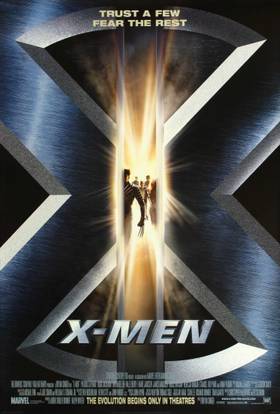
- Movie(s)
-
X-Men (2000), X2, X-Men: The Last Stand (2006), X-Men Origins: Wolverine (2009), X-Men: First Class (2011), The Wolverine (2013), X-Men: Days of Future Past (2014), Deadpool (2016), X-Men: Apocalypse (2016), Logan (2017), Deadpool 2 (2018), Dark Phoenix (2019), The New Mutants, Deadpool & Wolverine (2024)
- TV Show(s)
-
X-Men: Pryde of the X-Men, X-Men (1992), X-Men: Evolution (2000), Wolverine and the X-Men (2008), Marvel Anime: Wolverine, Marvel Anime: X-Men, Legion (2017), The Gifted (2017), X-Men ’97 (2024)
- Video Game(s)
-
X-Men: Children of the Atom (1994), Marvel Super Heroes (1995), X-Men vs. Street Fighter (1996), Marvel Super Heroes vs. Street Fighter (1997), Marvel vs. Capcom (1998), X-Men: Mutant Academy (2000), Marvel vs. Capcom 2: New Age of Heroes (2000), X-Men: Mutant Academy 2 (2001), X-Men: Next Dimension (2002), Marvel vs. Capcom 3: Fate of Two Worlds (2011), Ultimate Marvel vs. Capcom 3 (2011), X-Men Legends (2005), X-Men Legends 2: Rise of Apocalypse (2005), X2: Wolverine’s Revenge (2003), X-Men (1993), X-Men 2: Clone Wars (1995), X-Men: Mutant Apocalypse (1994)
- First Film
-
X-Men (2000)
- Character(s)
-
Professor X, Cyclops, Iceman, Beast, Angel, Phoenix, Wolverine, Gambit, Rogue, Storm, Jubilee, Morph, Nightcrawler, Havok, Banshee, Colossus, Magneto, Psylocke, Juggernaut, Cable, X-23
- Comic Release Date
-
213035,212968

