


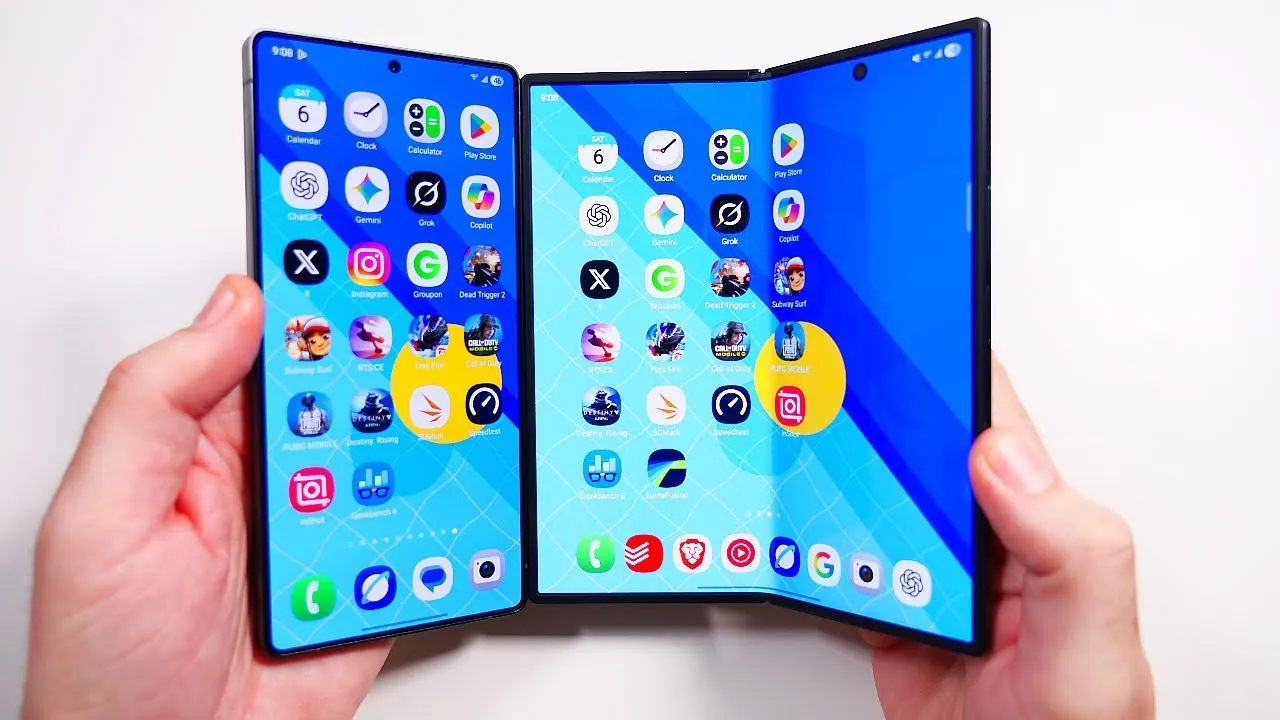
The Galaxy Z TriFold is poised to reshape the foldable smartphone landscape by merging the capabilities of a smartphone and tablet into a single, innovative device. Its tri-fold design, expansive interior display, and advanced multitasking features offer a glimpse into the future of mobile technology. However, this ambitious device also faces challenges, including increased thickness, potential battery limitations, and the absence of S Pen support. Here’s an in-depth exploration video from Nick Ackerman of what this next-generation foldable device brings to the table
Design and Display: A Fusion of Innovation and Functionality
The Galaxy Z TriFold introduces an innovative tri-fold design, allowing it to unfold into a 10-inch interior display. This design transforms the device from a compact smartphone into a tablet, offering users a larger screen for enhanced productivity and immersive entertainment. Whether you’re multitasking, streaming videos, or working on the go, the expansive display provides a versatile platform for various activities.
However, the innovative design comes with trade-offs. The inclusion of two hinges to enable the tri-fold mechanism results in a thicker device, which may compromise portability compared to slimmer foldable models. Additionally, the complexity of the folding mechanism raises questions about long-term durability, especially for users accustomed to more robust and straightforward designs. Despite these concerns, the Galaxy Z TriFold’s design represents a significant step forward in foldable technology.
Multitasking and Productivity: Setting a New Benchmark
One of the standout features of the Galaxy Z TriFold is its ability to run up to three applications simultaneously. This capability makes it an ideal tool for multitaskers, allowing seamless transitions between tasks such as video conferencing, document editing, and web browsing. The device’s multitasking prowess is further enhanced by its large display, which provides ample space for managing multiple windows without feeling cramped.
The inclusion of Dex mode improves the device’s productivity potential by transforming it into a desktop-like workstation. This feature eliminates the need for an external monitor, allowing users to enjoy a desktop computing experience directly from their device. For professionals and productivity-focused users, the Galaxy Z TriFold bridges the gap between mobile convenience and desktop functionality, making it a versatile tool for work and play.
Performance and Features: Balancing Power and Limitations
The Galaxy Z TriFold is equipped with an advanced mobile CPU, ensuring smooth performance for demanding applications and multitasking. Its 200MP rear camera delivers high-resolution photography, catering to users who prioritize quality imaging. These features position the device as a powerful contender in the premium smartphone market.
However, the device is not without its limitations. The absence of S Pen support is a notable drawback, particularly for creative users who rely on stylus input for tasks such as drawing, note-taking, or precision editing. Additionally, the large 10-inch display, while impressive, may place significant demands on the battery, raising concerns about its ability to sustain extended use without frequent recharging. These limitations highlight areas where future iterations of the device could see meaningful improvements.
Market Position and Pricing: A Premium Investment
The Galaxy Z TriFold is expected to debut in Q1 2026 with a price range of $2,500 to $3,000, positioning it as a premium offering aimed at early adopters and tech enthusiasts. This pricing reflects its innovative design and features, but it may deter mainstream users who prioritize affordability over innovation. For those willing to invest in the latest advancements, the Galaxy Z TriFold offers a unique combination of versatility and functionality.
Pros and Cons: Weighing the Trade-Offs
- Pros: Expansive 10-inch display for enhanced productivity, advanced multitasking capabilities, and the potential to replace multiple devices.
- Cons: Increased thickness, lack of S Pen support, potential durability concerns, and battery life limitations.
Future Prospects: Opportunities for Refinement
As a first-generation device, the Galaxy Z TriFold lays the foundation for future advancements in foldable technology. Potential areas for improvement include a thinner and more portable design, enhanced battery performance, and the integration of S Pen support to cater to creative users. Additionally, competition from other manufacturers, such as Huawei, is likely to drive further innovation in the foldable market. These developments could lead to more refined and accessible options, ultimately benefiting consumers with devices that combine innovative technology with practicality.
The Galaxy Z TriFold represents a bold step forward in the evolution of foldable devices. While its high price and first-generation limitations may restrict its appeal to a niche audience, it sets the stage for future innovations that could make foldable technology more practical and accessible for a broader range of users.
Here are more detailed guides and articles that you may find helpful on Galaxy Z TriFold.
Source & Image Credit: Nick Ackerman
Filed Under: Gadgets News
Latest Geeky Gadgets Deals
Disclosure: Some of our articles include affiliate links. If you buy something through one of these links, Geeky Gadgets may earn an affiliate commission. Learn about our Disclosure Policy.

